30 Yard Roll Off Container Guide for Commercial Projects
Large construction and industrial projects rarely produce a single, predictable material stream. They generate changing volumes of wood, drywall, metal, fixtures, and other materials across active sites, often under tight schedules and reporting requirements. Selecting the right open-top container helps operations teams control site flow without losing visibility into weight, diversion, or pickup timing.
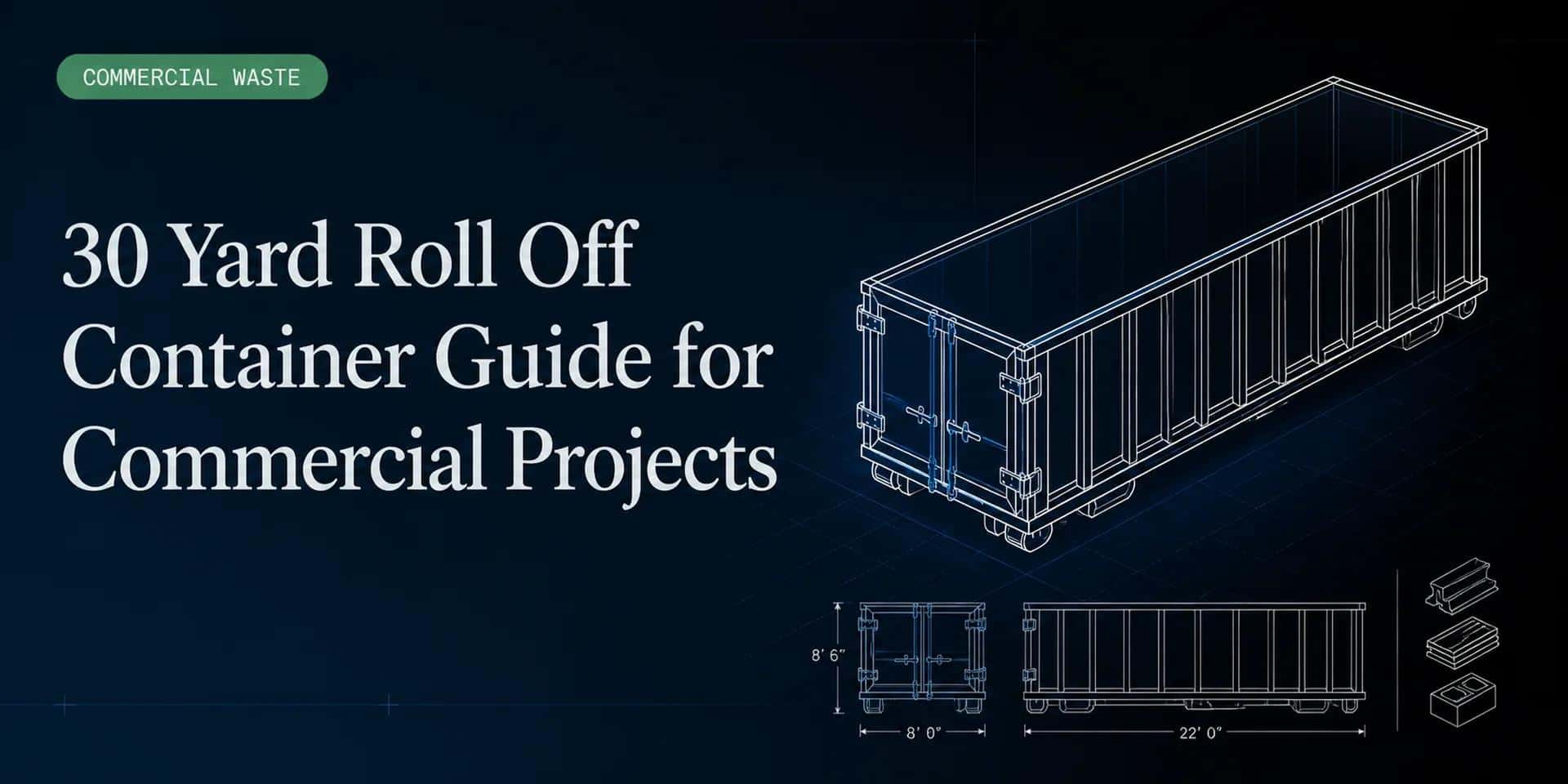
A 30 yard roll off container provides about 30 cubic yards of capacity and typically measures 22 feet long, 8 feet wide, and 6 feet high. It can support large commercial projects, but teams must confirm site access, material type, and applicable weight limits before delivery.
Capacity is only the starting point. Dimensions, load density, and placement conditions determine whether the container is practical for a project, while documented diversion data can connect material handling to broader sustainability goals. The next step is to examine the physical specifications and weight considerations that shape container selection.
What Are the Dimensions and Weight Limits of a 30-Yard Roll-Off Container?
A standard 30-yard roll-off container provides approximately 30 cubic yards of capacity. Waste Management lists a typical model at 22 feet long, 8 feet wide, and 6 feet high, with room for approximately 14 pickup-truck loads of material. These dimensions make it a practical fit for substantial commercial renovation, construction, and facility cleanout projects.
Specifications are not universal. Waste Management lists its 30-yard model at 22 ft L x 8 ft W x 6 ft H. While Republic Services lists a comparable model at 23 ft 1 in L x 8 ft 3 in W x 6 ft 1 in H. The differences reflect manufacturer and service-provider variation, so confirm the exact container footprint before scheduling delivery. (Waste Management specifications; Republic Services specifications)
Why weight limits matter
Volume is only one part of capacity planning. A commonly cited maximum for a 30-yard container is approximately 10 tons, although the applicable limit depends on the provider, container, material, and local road regulations. Dense materials such as concrete, masonry, soil, and roofing materials can reach a weight threshold before the container is full.
Staying within the approved limit supports safer loading, transport, and placement. It also helps prevent rejected pickups, load adjustments, transportation restrictions, and overage fees. For projects with heavy material streams, separate containers or a smaller container with more frequent service may be more appropriate than filling one container to its physical volume.
How common roll-off sizes compare for commercial planning
Container size
Approximate volume
Best planning use
Key confirmation
20-yard
20 cubic yards
Moderate material volume or heavier streams
Provider dimensions and tonnage limit
30-yard
30 cubic yards; approximately 14 pickup-truck loads
Large renovation, construction, or facility projects
Exact footprint and approximately 10-ton limit
40-yard
40 cubic yards
Higher-volume, lower-density material streams
Provider dimensions and tonnage limit
For budgeting, pair the selected size with expected material type, service frequency, and haul distance. See this commercial waste collection pricing guide for the cost factors that should be reviewed before ordering.
What Materials Can You Put in a 30-Yard Roll-Off Container?
Material planning keeps a commercial container safe, compliant, and easier to process. Before delivery, confirm the accepted material profile for the project and separate items that require specialized handling. A mixed load may be appropriate for a renovation or facility cleanout, but heavier materials can quickly approach the container's weight limit.
Commonly permitted materials
A 30-yard roll-off container can typically support materials such as:
- Construction debris, including clean wood, drywall, lumber, and siding
- Metal scraps and non-hazardous fixture components
- Concrete, brick, and masonry in moderate quantities, based on applicable weight limits
- Cardboard and paper from commercial operations
- Furniture, shelving, and building fixtures
- Non-hazardous materials from commercial renovation, relocation, or facility cleanout work
- Yard waste, where accepted for the selected service and local processing facility
Concrete, brick, and other dense materials deserve special attention. A standard 30-yard container typically holds about 30 cubic yards, but volume is not the only constraint. Maximum tonnage limits must be followed, and a commonly cited limit for this container size is 10 tons. Confirm the approved weight threshold before loading dense material.
Materials that require separate handling
Do not place hazardous waste, chemicals, solvents, paints, thinners, asbestos-containing materials, tires, batteries, refrigerants, or medical waste in the container. Electronics should also be separated rather than mixed into the general material stream. CheckSammy can route eligible electronics through dedicated recycling services and other specialized disposition pathways.
Separation also improves the quality of sustainability reporting. CheckSammy verifies container weights and tracks diversion metrics for recyclable materials in the stream, creating a clearer record of what was recovered, processed, or directed away from landfill. That chain-of-custody visibility gives facilities and sustainability teams useful data for ESG reporting instead of relying on estimates. Confirm local acceptance rules and the project's material profile with the service team before loading.
Typical Commercial and Industrial Applications for 30-Yard Roll-Off Containers
A 30-yard roll-off container fits the operating profile of medium-to-large commercial projects that generate sustained material volume. It offers more capacity than a 20-yard container without the larger footprint of a 40-yard model. Making it a practical middle choice when site access, staging space, and collection cadence all matter.
Construction, renovation, and demolition
Commercial builders use this size for new office, retail, industrial, and mixed-use construction, as well as building additions and structural renovations. It can support recurring removal of wood, drywall, metal, packaging, and other project materials as work progresses. Demolition projects also benefit from multiple containers staged by phase or material stream. Particularly when the project team needs to keep active work areas clear and maintain predictable haul schedules.
For a broader view of placement, capacity, and operational planning, see these open top containers benefits for commercial construction projects.
Retail closures and property cleanouts
Large-scale retail store closures can require rapid deployment across multiple locations, with fixtures, shelving, inventory remnants, and construction materials moving through a coordinated recovery plan. In one national retail closure, CheckSammy deployed more than 150 containers in a single week and achieved an 87% diversion rate. That kind of project calls for consistent scheduling, centralized oversight, and clear reporting rather than isolated site-by-site arrangements.
The same approach applies to large-scale commercial property cleanouts, including portfolio transitions, tenant turnover, redevelopment preparation, and asset disposition programs. A 30-yard container can be assigned to each active zone or location, while the overall program remains managed through one operational framework.
Manufacturing, industrial, and hospitality operations
Manufacturing facilities can use 30-yard containers for segregated scrap management, production-related materials, packaging, and periodic material recovery. Industrial plant cleanouts and retrofits often generate mixed volumes over a compressed schedule, so containers can be rotated as equipment, fixtures, and construction materials are removed. Site teams should confirm material types and weight limits before loading, especially when dense materials may approach the commonly cited 10-ton limit.
Hospitality renovations create a similar need. Hotel and resort upgrades may involve room furnishings, flooring, millwork, fixtures, and demolition debris across many rooms or buildings. Staging 30-yard containers near defined work areas helps contractors maintain safer, more orderly operations while supporting documented diversion and chain-of-custody reporting.
How to Plan for a 30-Yard Roll-Off Container Delivery and Pickup
Reliable container logistics start before the delivery vehicle arrives. A prepared commercial site reduces access delays, protects pavement, and helps teams keep material handling aligned with project schedules. Use the following steps to coordinate a smooth delivery and pickup.
- Assess site access and clearanceConfirm a straight approach with approximately 60 to 100 feet of usable clearance for the delivery vehicle and container placement. Industry guidance commonly recommends clearing 100 feet for safe maneuverability during drop-off and pickup. Verify that the ground is level and stable, and look for low overhead wires, branches, signs, and other obstructions. Measure the entrance, gate, and driveway as well. Allow at least 12 feet of width so the vehicle can enter and position the container safely.
- Choose a practical placement locationPlace the container where workers can load it without crossing active traffic lanes or disrupting daily operations. Keep fire routes, loading zones, emergency access, and customer-facing areas clear. If the container will sit on asphalt, concrete, or another finished surface, use plywood beneath the contact points to help protect the pavement from equipment pressure and movement. Confirm the proposed location with the site or facilities manager before delivery.
- Order with the right lead timeShare the site address, access instructions, placement requirements, material types, and requested service window when ordering. CheckSammy offers same-day delivery when an order is placed by noon, subject to market and route availability. For planned renovations, facility cleanouts, or multi-site work, advance scheduling gives operations teams more control over labor, staging, and pickup timing. For budget planning, review this commercial waste collection pricing guide.
- Load materials strategicallyLoad heavier materials first and distribute weight evenly across the container floor rather than concentrating it at one end. Keep contents below the fill line and secure loose material as required by the service provider. Monitor dense materials closely because container volume does not eliminate weight limits. A commonly cited maximum for a 30-yard container is 10 tons, but the applicable limit depends on the container, vehicle, route, and material stream. Ask for guidance before loading unusually heavy material.
- Schedule pickup around the work planRequest pickup when the container is ready, while preserving enough access for the vehicle to remove it safely. Flexible rental periods help commercial teams coordinate service with changing project milestones, and CheckSammy does not add hidden extension fees. Its reported 99.2% first-visit completion rate supports dependable scheduling, but access conditions should remain unchanged from delivery. Keep the approach clear, remove parked vehicles, and confirm any updated instructions before the pickup window.
How CheckSammy's 30-Yard Open-Top Container Service Supports Multi-Location Operations
For enterprise teams coordinating projects across multiple sites, the container is only one part of the operating model. CheckSammy pairs commercial roll-off services with centralized logistics, verified material tracking, and consistent reporting. So facility and procurement leaders can manage deployments through one partner rather than coordinating separate local haulers.
One operating model across the national footprint
CheckSammy supports coverage across all 50 states, making it possible to standardize service for retail closures, renovations, facility cleanouts, and other distributed programs. A single vendor, invoice, and dashboard can simplify procurement while giving operations teams a clearer view of delivery, pickup, material movement, and final disposition. Same-day delivery is available where the project and local conditions allow, and flexible rental periods help teams adjust as schedules change without relying on a rigid, one-size-fits-all timeline.
For a national retail store-closure program, CheckSammy deployed more than 150 containers and achieved 87% diversion. That example illustrates the value of coordinating a multi-site rollout with consistent requirements and centralized oversight. Pricing can also be 30-40% lower than traditional waste-hauling models, depending on the project scope and material streams.
Verified outcomes from pickup through disposition
Each container can be supported by weight verification, diversion metrics, and real-time chain-of-custody tracking from pickup through final disposition. CheckSammy reports a 94% average diversion rate through its ZeroPoint processing facilities, with measurements supported by state-certified scales when applicable. This gives sustainability and compliance teams stronger evidence than estimated volumes alone.
At ZeroPoint Facilities, controlled processing helps route materials into appropriate recovery and recycling pathways. The resulting data can feed automated, ESG-ready reporting, including carbon-impact information, while the recycling services program supports broader diversion goals. Teams that need a coordinated deployment can review commercial roll-off services and align container scheduling, site requirements, and reporting before work begins.
Frequently Asked Questions
How much material can a 30-yard roll-off container hold?
It provides approximately 30 cubic yards of volume and can hold about 14 pickup-truck loads, depending on the material's density and how efficiently it is loaded. Dense materials can reach the container's weight limit before the available volume is full, so project teams should estimate both volume and weight. WM's 30-yard specifications provide a useful planning reference.
How big is a 30-yard roll-off container?
A standard model is approximately 22 feet long, 8 feet wide, and 6 feet high. Actual dimensions vary by provider and equipment, so confirm the selected container's footprint before reserving a placement area. For example, Republic Services lists slightly different dimensions for one 30-yard model.
Is a 30-yard roll-off container suitable for commercial bulk waste?
Yes. It is commonly suited to construction, demolition, large renovations, industrial facility cleanouts, and other projects generating substantial material volumes. For multi-location programs, the more important consideration is operational control: consistent scheduling, documented weights, material-specific routing, and reporting that procurement and sustainability teams can use.
How should a project team calculate container capacity requirements?
Start with the material types, estimated cubic volume, expected weight, project duration, and pickup frequency. Separate dense materials such as masonry from lighter mixed materials, then compare the estimate with the provider's weight limit. The commonly cited maximum for a 30-yard model is 10 tons, but limits vary by provider and local requirements, so confirm them before delivery. Review the provider's specifications and plan for a replacement or additional container if the project is likely to exceed either limit.
Ready to Schedule Service?
Coordinating container service across construction or industrial locations is easier with one experienced partner and clear visibility into material handling. CheckSammy can help align service planning with your operational needs and sustainability goals. Contact us to schedule service for your project and discuss the right approach for your sites.