Commercial Organic Waste Recycling: A Guide for Grocery and Food Service Chains
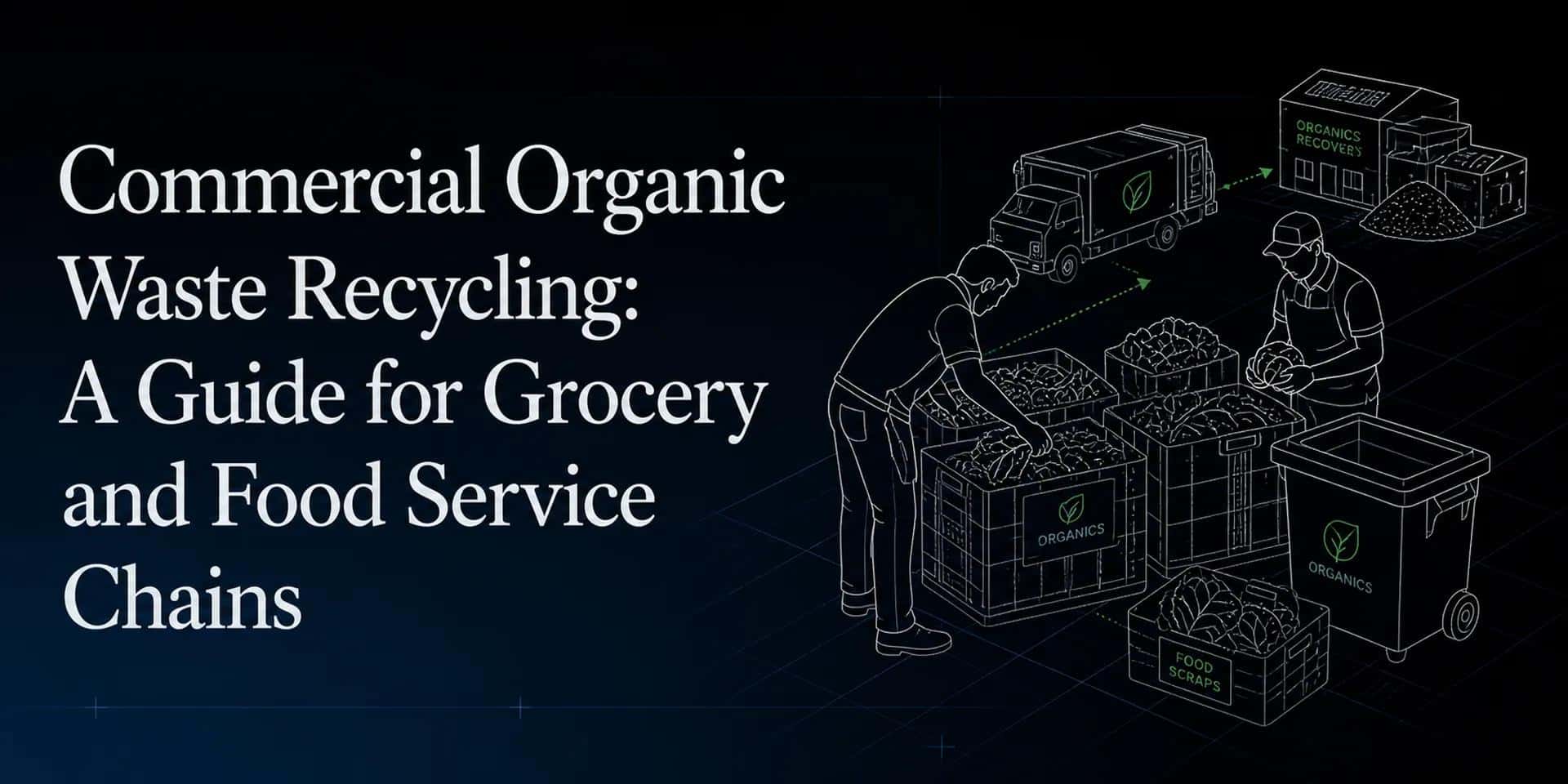
Food scraps can become a cost, compliance, and reporting risk across hundreds of locations.
Commercial organic waste recycling gives grocery chains and food service operators a measured way to recover food scraps and food-soiled paper at scale. It can route suitable materials to composting or anaerobic digestion, where organics become soil amendment or captured biogas instead of breaking down without oxygen. The right program also supports local rules, clear chain-of-custody records, and site-level reporting for sustainability and procurement teams. The U.S. Environmental Protection Agency notes that organic materials make up 51.4 percent of municipal solid waste in landfills (EPA). CheckSammy helps multi-location enterprises coordinate service, verify diversion, and turn food waste data into useful business insight.
Request a quote for your commercial organic waste recycling program today.
The question is not whether organics belong in a recovery program. It is how a large chain can make that program work across sites, vendors, and rules. Here is how.
Why Commercial Organic Waste Recycling Matters for Grocery and Food Service Chains
Organic materials make up more than half of the waste stream for grocery and food service operations. Diverting food scraps through composting or anaerobic digestion reduces methane emissions, supports regulatory compliance, and gives enterprise teams measurable data for ESG reporting and vendor management.
Grocery stores and food service chains handle organic material every day. Food scraps and food-soiled paper make up about one-third of the average business waste stream. For a chain with many sites, that share can create a large, steady flow of material that needs a clear plan.
The scale is wider than food alone. The U.S. Environmental Protection Agency reports that food, yard trimmings, wood, and paper or paperboard make up 51.4% of municipal solid waste in landfills. A strong food waste management solution can help teams track this stream and route it to a better end use.
Why methane makes diversion urgent
Organic materials can create methane when they break down without oxygen in a landfill. Methane is a powerful greenhouse gas, so the way a company handles food scraps affects more than site operations. It also affects the climate data behind its sustainability work.
The EPA states that wasted food is responsible for 58% of landfill methane emissions in the United States. Its guidance on composting explains how organics recycling can keep food scraps out of this process. For enterprise teams, that gives a clear reason to measure each site, not just set a broad annual goal.
The business case for chain-wide action
Commercial organic waste recycling can support cost control, ESG reporting, and more consistent site work. Separate collection makes the material stream easier to measure. It can also help leaders compare locations, find gaps, and set clear goals for vendors and facility teams. Key benefits include:
- Measurable diversion rates across every site with auditable chain-of-custody records
- Reduced hauling costs through consolidated volumes and optimized pickup schedules
- Regulatory compliance in jurisdictions with organic waste mandate laws
- Verified data for ESG reporting, buyer audits, and internal sustainability goals
- Improved vendor accountability through shared service records and performance tracking
Good records help procurement teams review vendor results over time. That makes it easier to spot missed pickups, weak sorting, or sites that need more training. Clear data turns a broad goal into a set of actions that local teams can follow. Read about organics recycling in restaurants for a closer look at food service use cases. For multi-location operators, the goal is not one successful pilot. It is a repeatable system that works across the full network.
Composting vs. Anaerobic Digestion: Choosing the Right Method for Large-Scale Food Waste
Composting breaks down organics with oxygen to create soil amendment, while anaerobic digestion converts wet food waste into biogas and nutrient-rich digestate in sealed tanks. The right choice depends on material mix, facility access, energy recovery goals, and local processor availability.
How composting works
Composting uses air, moisture, heat, and time to turn food scraps and other organic materials into a stable soil amendment. The process moves through mesophilic and thermophilic phases, then a cooling and maturation phase. Each phase needs the right mix of carbon, water, oxygen, and regular turning or aeration.
Large sites may need several weeks before finished compost is ready. The exact time depends on feedstock, pile or vessel design, weather, and how often the material is turned. The EPA's compost guidance notes that compost can add organic matter, help soil hold water, and reduce nutrient runoff.
Compost works well when a program has clean food scraps, yard material, food-soiled paper, and a nearby end use for the finished product. It can support farms, landscapers, and soil projects. This matters at scale because about 33% of soils worldwide are moderately or highly degraded, and compost can help improve soil quality.
How anaerobic digestion works
Anaerobic digestion, or AD, breaks down organic material in a sealed tank without oxygen. Microbes convert the material into biogas and digestate. The process often takes about 5 to 30 days, depending on the system, feedstock, and operating goals.
Biogas is a key reason enterprises choose AD. The EPA explains that captured biogas can fuel equipment or generate electricity. The remaining digestate is rich in nutrients and can be separated into solid and liquid parts for use as crop fertilizer.
AD can accept wet, energy-rich material such as food scraps, meat, and dairy. Some composting sites restrict meat, dairy, oils, or other items because they can create odors, pests, or process problems in an open system. Always confirm accepted materials with the receiving facility before changing collection rules.
Commercial method comparison
Neither method is right for every site. The best choice depends on the material mix, haul distance, facility access, energy goals, contamination control, and local markets for the outputs. Use this comparison as a starting point for a commercial organic waste recycling plan.
- Composting: aerobic breakdown with heat, air, moisture, and curing; produces finished compost and soil amendment; energy recovery is not a core output; best fit for clean, source-separated organics with a nearby soil use.
- Anaerobic digestion: sealed, oxygen-free microbial breakdown; produces biogas and nutrient-rich digestate; biogas can fuel equipment or make power; best fit for wet food streams, including some meat and dairy, with energy demand.
For grocery chains and food service groups, scale changes the decision. A single site may use composting, while a multi-location network may route different streams to both systems. A central plan can set source rules, track weights, confirm acceptance, and compare output value by market.
Start with a material audit and a map of approved processors. Then test contamination rates, pickup frequency, service windows, and total cost per location. CheckSammy's anaerobic digestion vs composting guide offers a deeper look at the tradeoffs for enterprise programs.
What States Require Commercial Organic Waste Recycling?
California, New York City, Vermont, Massachusetts, Connecticut, and several other states have enacted organic waste mandate laws for commercial generators. Requirements vary by business size, material volume, and facility type, making a multi-jurisdiction compliance strategy essential for enterprise chains.
California's organics rules
California has one of the most visible frameworks for commercial organic waste recycling. Senate Bill 1383 sets statewide goals for cutting organic waste in landfills and calls for covered businesses to separate organic materials for recovery. Assembly Bill 1826 also established recycling duties for many businesses that produce large amounts of organic material.
These rules matter to grocery stores, food service groups, and other firms with many sites. Organic materials make up more than half of the municipal solid waste sent to U.S. landfills, according to the U.S. Environmental Protection Agency. A chain that serves California must track which sites are covered, what materials each site creates, and how those materials move to a recovery outlet.
New York City requirements
New York City uses a separate local approach. Local Law 146 of 2013 created commercial organics rules for covered food service establishments and other large food-related sites. Coverage can depend on site type, size, and the volume of organic material produced. For example, some food service sites over 7,000 square feet fall within the rules described by local service guidance.
This local model shows why one national policy is not enough. A restaurant or grocery group may need one plan for New York City and another for California. Its site teams may also need clear rules for bin placement, staff training, pickup schedules, and proof that each load reached the right recovery facility. See the related guide to food waste management solutions for the operating basics behind those plans.
Managing rules across many sites
Other states and cities have also adopted organics recycling rules, but the details differ. Some set thresholds by business size or material volume. Others focus on food service, large institutions, or access to a local composting or digestion program. Rules can change as new phases take effect, so compliance is an ongoing task.
For multi-location chains, the hard part is often not finding one vendor. It is keeping one clear record across many jurisdictions. CheckSammy helps enterprise teams coordinate service across its nationwide network, with real-time data and an auditable chain of custody. That view can help leaders compare site performance, flag gaps, and support reports for compliance and sustainability teams.
Central teams should also set a shared data standard. Each site can log weights, pickup dates, material type, service status, and the receiving facility. With the same fields in each market, leaders can spot missed service and build a cleaner audit trail without asking every store for a separate report.
A strong program starts with a site-by-site review. Map each location's rules, material streams, container needs, pickup plan, and reporting needs. Then set a repeatable process that local teams can follow while central leaders retain one view of performance.
How CheckSammy Handles Organic Waste Diversion at Scale
CheckSammy combines a nationwide service network, ZeroPoint Facilities for material sorting, real-time tracking with auditable chain of custody. And automated ESG reporting to manage commercial organic waste recycling across hundreds of enterprise locations.
Commercial organic waste recycling becomes hard when one enterprise has hundreds of sites, varied material streams, and different local rules. CheckSammy brings those needs into one operating model. The platform connects field service, processing, data, and reporting so sustainability teams can track results across North America.
That work matters beyond site collection. When organic material breaks down without oxygen, it can create methane, a powerful greenhouse gas, according to the U.S. Environmental Protection Agency. CheckSammy helps enterprises route food and other organic streams to the right recovery path while keeping each step visible. Core capabilities include:
- ZeroPoint Facilities that sort, aggregate, and route complex material streams to the right recovery partners
- Nationwide network of more than 10,000 vetted professionals serving 25,000+ facilities
- Real-time tracking with auditable chain of custody from pickup through final processing
- Automated ESG reporting supporting six major frameworks
- Verified diversion measured through state-certified scales with 94% average diversion rate
Coverage built for enterprise operations
CheckSammy's network includes more than 10,000 vetted professionals and 25,000 facilities. This reach supports programs that span cities, states, and facility types. It also helps reduce the gaps that can arise when a single provider cannot serve every market.
The network has supported the diversion of more than 175 million pounds from landfills. Its average diversion rate is 94%, measured through state-certified scales when applicable. A 99.2% first-visit completion rate adds an operational measure that facility and procurement teams can use when reviewing service performance.
Proof from pickup through reporting
Real-time tracking gives enterprise teams a view of work from pickup through final processing. An auditable chain of custody connects service activity with material outcomes. That record can support internal reviews, supplier checks, and sustainability reports.
Automated ESG reporting supports six major frameworks, helping teams turn field data into a repeatable reporting process. The Organics Milk Run case study shows how a focused organics program can work in practice. For a broader view, review CheckSammy's recycling services and its guide to waste diversion for grocery companies.
Frequently Asked Questions
How can grocery chains measure commercial organic waste recycling results?
Measure results by location, material stream, weight, recovery route, and service date. Track contamination, pickup completion, diversion rate, and the final processing site. A shared dashboard can link each pickup to a certificate or other record. This gives sustainability and procurement teams consistent data for audits, reports, and vendor reviews across many sites.
What should food service operators include in an organic recycling plan?
Start with a site review that maps food scraps, food-soiled paper, storage space, pickup needs, and local rules. Set clear sorting steps for staff and vendors. Choose a recovery route that fits the material and service volume. Then review contamination, missed pickups, weights, and reports each month so the plan can improve.
When is anaerobic digestion a good fit for commercial food waste?
Anaerobic digestion can fit sites with steady organic volumes and access to a suitable processing facility. The process can create biogas for fuel or electricity, while the remaining digestate may be used as crop fertilizer. The U.S. Environmental Protection Agency explains both outputs and their common uses.
Why should businesses keep food scraps out of landfills?
Food scraps break down without oxygen in landfills and can create methane, a powerful greenhouse gas. The EPA reports that wasted food causes 58% of landfill methane emissions in the United States. Separating organics supports composting or anaerobic digestion and creates better records for sustainability goals.
Can one program support organic recycling across multiple states?
Yes, but the program must account for differences in local rules, accepted materials, container needs, pickup schedules, and reporting fields. A central operating plan can set common standards while allowing site-level changes. Each location should retain service records and processing data. This approach helps enterprise teams manage compliance and compare results across markets.
Ready to improve organic waste recovery?
Delaying a clear recovery plan can leave grocery and food service sites with higher hauling costs, uneven results, and added compliance risk. Start now to map each location, choose the right outlet, and build a schedule that supports steady diversion across your network. A focused plan also gives your team cleaner data for ESG reports and vendor reviews. Early action helps site teams align on pickup steps before peak periods create added strain. It can also give leaders a clear view of progress across regions and facilities.