Recall Management Services for Enterprise Operations
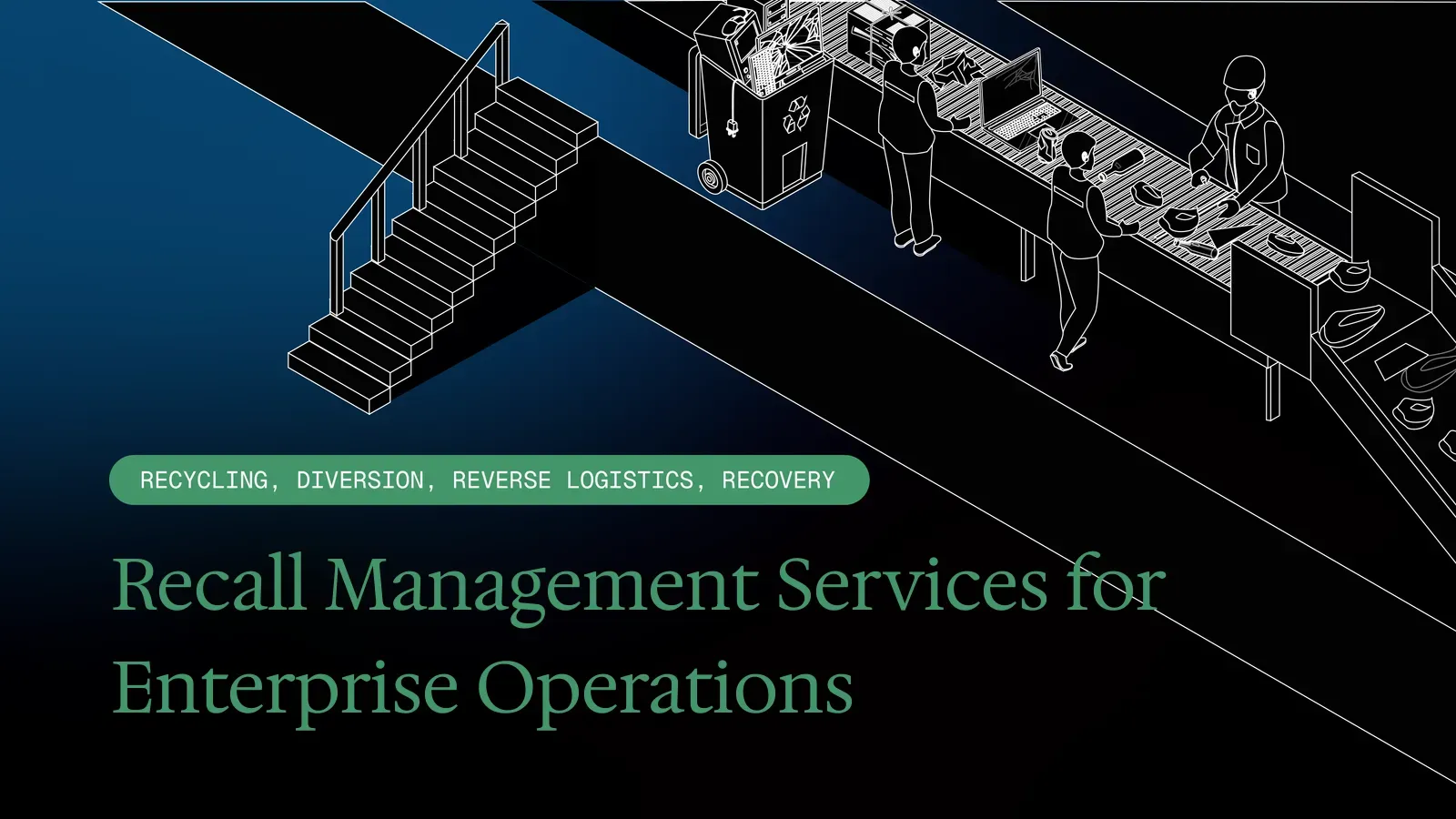
Recall management services help enterprise teams coordinate approved product actions across sites, vendors, and internal functions. The work involves more than sending an alert: teams need a dependable way to define the scope, assign tasks, track site responses, and escalate exceptions without shifting product-safety authority to an operational partner.
Explore reverse logistics support for complex operations.
What should recall management services coordinate?
A response may involve distribution centers, retail locations, service depots, offices, and customer-facing sites. Depending on the approved plan, teams may identify inventory, pause movement, notify specified parties, isolate items, arrange retrieval, and document outcomes. The exact actions depend on the product, reason for action, applicable requirements, and direction from responsible company leaders and advisers.
Separate approval from execution. Product safety, quality, legal, regulatory, and communications leaders determine the response. Operations translates approved decisions into site-level tasks. Logistics or service partners perform assigned work. A central coordinator makes status visible, tracks exceptions, and confirms closure. Write down this division of responsibility before activation and ensure every participant can find it.
This boundary matters when a field team encounters facts that were not in the initial plan. A site might report an unexpected identifier or an item transferred to another location. The operational response should preserve the information, protect the item as instructed, and escalate the discrepancy. Staff should not quietly expand the affected scope or make a product-safety conclusion.
Define what activates each process. A voluntary corrective action, regulator-directed recall, internal quality hold, or precautionary retrieval may involve different audiences and controls. Document the triggers and approval paths. A broad label such as urgent does not tell a location which playbook to follow, who can approve instructions, or what evidence to return.
Why do multi-location recalls become difficult to control?
Large organizations often have several systems describing the same product and site. Procurement records identify suppliers. Inventory systems show quantities. Transaction data shows movement. Local employees know what is physically present. These sources may use different identifiers, names, or units. Without reconciliation, an alert may reach the wrong sites or overlook a relevant location.
Consider a company whose central inventory calls an item by a product code while a local warehouse uses a vendor description. Both records may refer to the same goods, but a location cannot safely infer that from a partial match. The approved scope should specify which identifiers govern the search and what to do when a label, lot, serial number, or quantity does not match.
Time pressure adds another layer. A manager may receive an alert during a shift change. A regional operator may be handling other urgent work. One distribution center may need instructions on isolation while a customer-facing site needs approved communications. Different instruction versions can cause well-intended teams to take inconsistent actions.
External partners introduce more handoffs. A carrier may retrieve stock, a facilities team may prepare a holding area, or a reverse logistics partner may move items to an authorized destination. Each transition raises practical questions: Who approves the work? Which identifiers are checked? What proves completion? Who can approve a change if the planned route or collection window is unavailable?
Build around these failure points. A central action record should show the approved item definition, covered locations, instruction version, task owner, due date, status, exception, and evidence. Distinguish message delivery from completed action. A delivery receipt proves that a message arrived; it does not prove that a site searched its stock or finished an assigned task.
Compare the organization's location footprint with the operating model to identify sites where procedures, hours, access needs, or vendor arrangements differ. The goal is not to force every location into an identical workflow. Preserve required controls and document justified local variation.
How should teams establish authority and escalation?
Name an executive sponsor and a cross-functional incident group. Include functions that can approve product decisions, interpret obligations, communicate with affected audiences, and carry out field work. Assign alternates for critical roles. A process dependent on one individual is fragile, especially outside normal business hours or during a prolonged response.
Use a responsibility map that separates approval from execution. An authorized quality leader can approve the affected-item definition. Legal or regulatory specialists can review obligations. Communications can prepare approved language. Operations distributes tasks. A partner performs only work within its agreed scope. Name who resolves conflicts and who can pause work when instructions are unclear.
- Decision owner: Approves scope, instructions, and material changes.
- Program coordinator: Maintains the action log, version control, and overall status.
- Regional and site leads: Confirm receipt, readiness, item checks, and task completion.
- External partners: Perform authorized tasks and return agreed evidence.
- Escalation lead: Routes safety concerns, conflicting data, missed deadlines, and scope questions.
Make escalation thresholds concrete. Examples include a site unable to confirm whether it holds affected items, a mismatch between physical stock and system records, a partner unable to meet a collection window, or evidence that an item moved beyond the expected channel. For each threshold, specify who is alerted, how quickly, and what work can continue while a decision is pending.
For example, a location that finds a similar but unlisted product should not decide whether it is in scope. Its instruction can ask staff to record identifying details, maintain the approved interim control, and contact the designated decision owner. The coordinator logs the question and response, then distributes any approved scope update to every affected location. This gives decision-makers useful facts without allowing local guesses to become policy.
Set an operating rhythm for the central team. During an active response, review open tasks, unconfirmed locations, and overdue exceptions at planned intervals. Keep urgent safety concerns on an immediate path rather than waiting for a status meeting. A predictable cadence reveals stalled work while limiting repetitive reporting that does not change decisions.
Control communications. Every instruction should carry an owner, date, version, and intended audience. When scope or procedure changes, mark the earlier version as superseded and confirm which sites received the update. Keep an accessible record of acknowledgements. This reduces the chance that local teams act from an old attachment saved to a shared drive or email thread.
What information should the operating record contain?
A useful record answers a direct question: what was supposed to happen, where, when, by whom, and what evidence shows the result? Required detail varies by product and program. Responsible legal, quality, and regulatory teams should set fields rather than treating one template as universally sufficient.
Consider capturing a recall reference, approved product identifiers and scope, covered locations and contacts, instruction version and delivery status, site actions, deadlines, task and partner assignments, relevant quantities, exceptions, approvals, and closure status. Record the source and time of changes. Preserve the original entry when correcting it instead of silently replacing the history.
Evidence should match the action. A location may acknowledge an instruction, confirm a search, report a quantity, or document an authorized handoff. Those statements are not interchangeable. Define acceptable proof for each task, who reviews it, and how incomplete or conflicting submissions are handled. Avoid collecting sensitive personal information unless the approved process requires it.
Imagine a site reports that it found no affected stock. That response should not be confused with a site that has not yet searched. The workflow can distinguish “search complete, none found” from “not started,” “unable to access,” and “identifier uncertain.” If a site reports a quantity, specify its units and the time of the count. These distinctions make aggregate status more meaningful and reveal gaps a simple received/not-received field conceals.
Make the record usable in routine operations. If staff enter information on mobile devices, keep fields focused and instructions plain. Use controlled status options where practical, with a comment field for unusual cases. Give employees a way to flag uncertainty instead of forcing an inaccurate answer to submit a form.
Access and retention need a plan. Assign permissions by role, protect sensitive information, and establish how records are retained, reviewed, and produced for authorized stakeholders. Technology can make coordination easier, but the company remains responsible for access rules and recordkeeping obligations. A tool should support the approved process, not define legal requirements.
Before adopting a system or partner portal, map how identifiers connect across the workflow. A site code in inventory may differ from a facilities directory, while a quality reference may not match a transport record. Decide which identifier is authoritative for each purpose and how cross-references are maintained. Test a location correction and instruction change. Confirm who can update them, how users learn of the change, and how the record preserves prior versions.
For operational visibility, review CheckSammy platform information and its tracking and traceability capabilities. Evaluate any technology against the records, permissions, integrations, and audit trail the approved process requires.
How can teams coordinate retrieval and site work?
Translate the approved plan into tasks that sites can complete without interpreting policy. Each task should identify the item, state the required action and deadline, specify the approved destination or next step, and name an escalation contact. Add a confirmation step so teams distinguish receipt from completion.
Segment locations by their actual work. A warehouse may need to pause movement and isolate stock. A retail site may check backroom inventory and follow approved customer communication steps. An office with no product may still need to confirm that status. Tailored instructions reduce irrelevant work while keeping the central record complete.
Before scheduling retrieval, confirm the authorized scope, estimated quantities, access requirements, handling instructions, and receiving destination. Ensure every vendor understands what it is and is not authorized to do. If an item cannot be located or a route must change, record an exception instead of using an informal workaround. The accountable company lead should approve changes that affect the route or final destination.
A practical sequence is to validate the location list, issue the controlled instruction, collect acknowledgement, confirm site readiness, perform the authorized task, return evidence, and review exceptions. Each stage needs an owner and a clear definition of done. If a task cannot proceed, the record should show the reason, interim status, next owner, and decision needed. That is more useful than marking the task complete to clear a queue.
Plan for uneven site readiness. A location may have limited staff, restricted loading access, operating hours that differ from the standard schedule, or a local contact who is unavailable. The central team can sequence work by urgency while documenting delays and interim controls. A realistic plan is more dependable than a universal deadline that sites cannot meet.
When retrieval, return movement, or downstream material handling is part of the approved response, enterprises may need several service capabilities. CheckSammy describes reverse logistics services and sustainability hubs. These pages can help buyers assess adjacent operational needs. They do not replace product-specific decisions or regulatory interpretation.
How should procurement evaluate an operational provider?
Evaluate the operating model, not only a promise of speed. Ask for a clear scope, geographic assumptions, escalation commitments, information controls, partner oversight, and the evidence returned after each task. Confirm that the provider can support the locations and time windows in the program. Ask which tasks are performed directly and which rely on other providers.
Test handoffs with a scenario. Provide a sample location list, controlled product identifier, and hypothetical instructions with one deliberate exception. Ask how the provider receives the approved version, assigns work, notifies sites, returns status, and raises conflicts. Early evaluation should test process clarity, not require sharing live sensitive information.
Ask how capacity is managed when several regions activate at once. Clarify who assigns work across locations, how constraints are reported, and whether a substitute partner requires approval. Request sample status outputs and exception paths with confidential details removed. Confirm how records return to the client and reconcile with its location and task identifiers.
- Scope: Are tasks, exclusions, geographic assumptions, and change approvals explicit?
- Control: How does the provider prevent unauthorized instruction or route changes?
- Visibility: Can status be viewed by location, task, owner, and exception?
- Evidence: Are deliverables defined, time-stamped, and correctable when incomplete?
- Security: Do the agreement and process address access, data handling, retention, and incident reporting?
- Continuity: Is there a backup if a location, carrier, destination, or technology channel is unavailable?
A strong operational partner knows when to pause and ask for direction. It should not quietly broaden scope, select an unapproved destination, or make product-safety decisions for the client. Contract language should match the field playbook. The agreement should also identify how a material change is approved, communicated, and documented.
Use the scenario to assess practical detail. If one location is inaccessible, does the provider report the constraint and wait for direction, or reroute work without authorization? If a partner submits incomplete evidence, is the record flagged for review? If an instruction changes while tasks are underway, can the organization identify which sites still need the new version? The answers reveal whether controls are usable under pressure.
Where authorized decisions involve reverse movement or material recovery, compare capabilities against the defined workflow. CheckSammy's recycling services may be relevant to an approved material route. Confirm fit for the particular materials and instructions rather than assuming one route applies to every case.
Organizations can consult the U.S. Food and Drug Administration's official site when their product or response falls within its remit. Use current, product-specific guidance alongside advice from qualified counsel or the responsible regulatory team.
Review reverse logistics options for your operating model.
How can teams prepare before an incident?
Start with a realistic inventory of products, identifiers, systems, sites, and partners that could enter the workflow. Data quality will vary by location. Identify which system is authoritative for product scope, which owns location contacts, and who reconciles disagreements. Record how the master list and incident file are updated.
Write a concise playbook with activation criteria, decision roles, notification paths, task templates, escalation thresholds, evidence requirements, and closeout approval. Keep the core procedure stable and put product-specific instructions in controlled attachments. This makes it easier to update contacts without changing a previously approved product action.
Agree on record-completion rules before an exercise. Sites should know whether they must respond when they have no affected items, how to report an uncertain identifier, and what to do if a system is unavailable. Specify who reviews submissions and how corrections are recorded. Practice a fallback method for communicating controlled instructions if the usual platform is unavailable.
Run a tabletop exercise with a cross-section of sites and functions. Test a routine scenario and a difficult one, such as incomplete inventory, an unreachable local contact, or an unavailable partner route. Track how long it takes to identify locations, distribute a corrected instruction, collect status, and resolve an exception. Use the results to improve ownership and data quality, not to create unsupported performance promises.
A useful exercise tests both the message and the return path. Ask a site to acknowledge the notice, report an uncertain identifier, and submit a corrected quantity. Ask the coordinator to show current status, identify overdue sites, and explain who may approve a scope change. The exercise succeeds when participants can find the right authority and produce a traceable record, not when every hypothetical problem disappears.
Maintain a readiness checklist. Confirm contact lists, partner scopes, escalation routes, templates, and role-based access. Rehearse handoffs after meaningful changes to products, systems, locations, or vendors. A process that worked last year may no longer match the organization's footprint. Set an owner and review date for each readiness item so updates do not depend on memory.
Closeout deserves the same discipline as activation. The accountable leader should confirm required site tasks are complete or have documented exceptions, records are retained under approved policy, and open actions have an owner and due date. Capture lessons that improve the next response while keeping incident-specific conclusions distinct from general guidance.
Discuss operational support for complex reverse logistics needs.
Frequently asked questions
What are recall management services?
They are coordinated processes and supporting services that help an organization carry out approved actions across teams, sites, and partners. They may include task coordination, retrieval logistics, status visibility, and recordkeeping. Product-safety and regulatory decisions remain with responsible company authorities and advisers.
Who should own a company's recall process?
A designated executive sponsor should establish accountability, with a cross-functional team covering quality or product safety, legal or regulatory review, communications, operations, and procurement as appropriate. A coordinator can manage the action log while qualified decision-makers retain approval authority.
What should a location report?
The approved instruction defines the response. A location may acknowledge receipt, search for identified items, report quantities, secure stock, complete an authorized handoff, or explain an exception. The central team should distinguish each milestone and define acceptable evidence.
Can a logistics provider decide what happens to affected products?
Only within an explicitly authorized and appropriate scope. Product disposition, regulatory interpretation, customer communication, and safety conclusions should follow company governance. A provider should perform assigned work and escalate uncertainty instead of selecting an unapproved route.
When should an enterprise evaluate recall support?
Before an incident, when teams can compare scopes, test data controls, check escalation paths, and run an exercise. Revisit the plan when products, locations, systems, requirements, or partners change.
Recall readiness is an operating capability built before an alert arrives. Clear decision rights, consistent site instructions, disciplined handoffs, and reviewable evidence help enterprise teams coordinate an approved response while keeping operational support distinct from product-safety authority.