How to Optimize Reverse Logistics for Enterprise Returns
Enterprise retailers lose an estimated 15% of annual revenue to inefficient returns processing, yet most organizations treat reverse logistics as an operational afterthought. The scale of the challenge is staggering: 30% of all online purchases are returned, and the global reverse logistics market is projected to exceed $603 billion. Organizations that fail to optimize this flow leave substantial capital trapped in inventory depreciation, labor overhead, and missed recovery opportunities.
How to optimize reverse logistics requires a data-driven strategy that begins with policy reform, extends through AI-powered grading and disposition routing, and culminates in auditable sustainability reporting. Leading enterprises achieve 34% average value recovery by combining real-time chain-of-custody tracking with intelligent sorting through facilities like CheckSammy's ZeroPoint hubs.
Request a demo of CheckSammy's enterprise reverse logistics platform to see how technology-driven returns management can reduce costs and recover value at scale. The gap between best-in-class reverse logistics and average operations represents millions in recoverable margin for Fortune 500 companies. This article examines the operational and technological dimensions of returns optimization. We start by examining the true scope of the problem.
How To Optimize Reverse Logistics: What Is the True Cost of Inefficient Returns Processing?
Inefficient reverse logistics costs enterprise retailers up to 15% of total revenue through labor, freight, inventory depreciation, and lost recovery opportunities. With 30% of e-commerce purchases returned and a global market exceeding $603 billion, organizations without optimized returns workflows face compounding margin erosion that directly impacts bottom-line profitability.
The financial impact of poor returns processing extends far beyond accepted shipping costs. When items sit in processing centers without clear disposition paths, they lose market value daily. The EPA indicates that unprocessed returns in the reverse logistics flow represent a major source of lost economic value and increased waste.
Market scale and revenue impact
The reverse logistics market has reached a scale that demands executive attention. With market projections exceeding $603 billion, the volume of returned goods represents both a significant liability and an untapped revenue opportunity. For enterprise retailers, the total cost of processing returns including transportation, inspection, restocking, and markdowns can consume 15% or more of gross revenue.
Organizations that understand how to optimize reverse logistics treat returns not as a cost center but as a recoverable asset stream. Companies that implement data-driven reverse logistics workflows consistently outperform peers in margin retention.
Operational leakage and asset depreciation
Every day a returned item sits without a disposition decision, its recoverable value declines. Slow manual grading, inconsistent sorting criteria, and lack of real-time tracking create operational leakage that silently erodes margins. Organizations without automated condition assessment tools typically recover less than 15% of returned product value compared to the 34% industry benchmark achievable with AI-driven systems. Poor returns workflows also create inventory distortion. Items that could be resold languish in warehouses, tying up capital in goods that continue depreciating.
Key Strategies to Optimize Your Reverse Logistics Operations
How to optimize reverse logistics requires five interconnected strategies: updating return policies to reduce inbound volume, analyzing return data for root-cause prevention. Centralizing processing through dedicated hubs, connecting forward and reverse distribution networks, and deploying AI-powered grading and sorting technology to maximize value recovery and minimize landfill disposal.
Building a high-performance reverse logistics operation requires a systematic approach. Enterprise leaders must examine every touchpoint from the initial return authorization through final disposition to identify friction points and recovery opportunities.
Strengthen return policies to manage volume
The most effective cost-control measure is managing what comes back. Clear data-informed return policies that define acceptable condition standards, return windows, and restocking fees directly reduce the volume of non-resalable returns. Leading logistics firms note that policy adjustments can reduce return rates by 5-15% without negatively affecting customer satisfaction.
Leverage return data for root-cause analysis
Every return carries diagnostic information about product quality, packaging adequacy, and customer expectations. Systematic analysis of return reason codes reveals patterns that can be addressed at the source. Common root causes including sizing inconsistencies, shipping damage, and product misrepresentation can be corrected through upstream changes that prevent returns before they occur.
- Centralize processing through dedicated hubs. Single-site processing enables investment in automated grading equipment and standardized workflows, increasing throughput while maintaining quality control.
- Integrate forward and reverse distribution networks. Shared transportation and warehousing assets reduce marginal cost per unit. Coordinating outbound delivery with return collection maximizes asset utilization.
- Deploy AI-powered grading and sorting. Computer vision systems assess product condition in seconds, enabling real-time disposition decisions. This eliminates the manual inspection bottleneck and accelerates time-to-resale.
- Implement full-chain visibility technology. An enterprise reverse logistics platform provides real-time tracking from return initiation through final disposition, creating the audit trail required for operational control and ESG reporting.
- Engineer for zero-waste disposition. Every returned item follows an optimized path: recommerce, donation, recycling, or certified destruction. This approach ensures that divertible materials never reach landfills.
Scale through technology, not head count
Manual processing does not scale to enterprise volume. Automated returns management systems powered by AI and machine learning enable high-throughput processing without proportional labor increases. These platforms simultaneously improve recovery rates by making faster, more consistent disposition decisions.
How Does Technology Transform Returns Management?
Technology transforms returns management by replacing manual inspection with AI-powered computer vision grading. Replacing fragmented spreadsheets with centralized returns management platforms, and replacing opaque shipping with real-time chain-of-custody tracking. These advances enable enterprises to process returns in under 48 hours while achieving 34% average value recovery rates.
Digital infrastructure is the backbone of modern reverse logistics. Advanced technology stack components work together to create a seamless data-rich processing environment that turns returns from a cost center into a strategic asset.
Returns management platforms for enterprise scale
Enterprise-grade returns management software provides the centralized command center for reverse logistics operations. These platforms manage RMA workflows at scale, consolidating return data, tracking inventory disposition, and providing analytics that identify root causes and optimization opportunities. By connecting every return to its originating order and customer profile, these systems enable targeted interventions that reduce future return rates.
Computer vision and AI grading systems
Artificial intelligence has revolutionized product condition assessment. Modern computer vision systems trained on millions of product images can detect damage, wear, and completeness in seconds with accuracy exceeding human inspection. This speed advantage is transformative: where manual grading might process 50-100 items per hour per inspector. AI-powered systems can grade thousands of items per hour with greater consistency and objectivity.
Real-time tracking and automated material handling
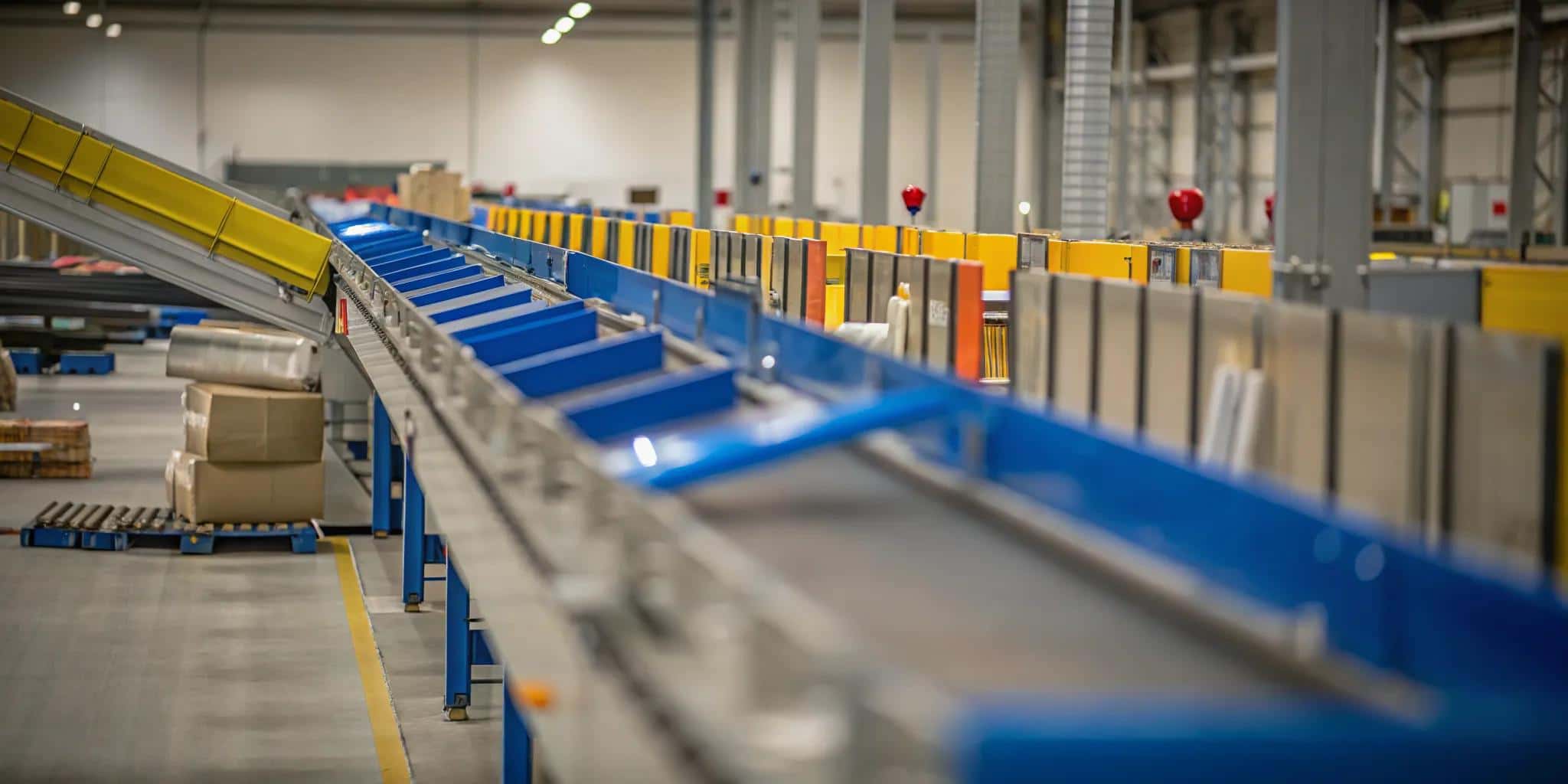
Full chain-of-custody visibility requires integrated tracking infrastructure. GPS-enabled shipment tracking, barcode scanning at every processing node, and photographic evidence capture create the audit trail that large enterprises and their auditors demand. Inside processing facilities, automated conveyance systems route items intelligently based on AI-generated disposition decisions. CheckSammy's ZeroPoint processing facilities exemplify this integrated approach, combining automated sorting with real-time data capture to maximize throughput and recovery.
Maximizing Value Recovery Through Intelligent Disposition
Intelligent disposition routing assigns each returned item to its highest-value path: recommerce for resalable goods. Donation for tax-advantaged disposition, recycling for material recovery, or certified destruction for brand-protection scenarios. Enterprises using data-driven disposition routing achieve 34% average value recovery on eligible returns.
The disposition decision is the single most impactful point in the reverse logistics workflow. Routing each returned item to its optimal destination determines both the financial recovery rate and the environmental outcome of the return.
The four disposition paths for returned goods
Every returned item can be routed through one of four disposition channels, each with distinct financial and environmental profiles. Recommerce generates the highest value recovery by returning goods to secondary markets. Donation provides tax benefits and community impact while avoiding landfill disposal. Recycling recovers raw materials for manufacturing, supporting sustainability and recycling services that keep materials in the economy. Certified destruction protects brand integrity and data security.
Disposition Path
Primary Goal
Value Recovery Level
Waste Impact
Recommerce
Resale for cash recovery
Highest (34% avg)
Low waste
Donation
Tax-advantaged community benefit
Low (tax deduction)
Low waste
Recycling
Material recovery for manufacturing
Minimal
Low waste
Certified Destruction
Brand and data protection
Zero
Controlled
Recovery optimization through intelligent routing
The 34% average value recovery rate achieved by optimized reverse logistics programs represents a meaningful margin contribution for enterprise retailers. This benchmark exceeds the typical recovery from bulk secondary-market sales by a significant margin. Key to achieving this rate is real-time condition assessment combined with dynamic routing that matches each item to the highest-value channel available at the moment of processing. CheckSammy's ZeroPoint processing facilities enable this precision routing at scale.
Building toward circular economy operations
Intelligent disposition is the operational foundation of circular economy principles in practice. By maximizing the time products remain in use through recommerce and ensuring end-of-life materials return to manufacturing through recycling, enterprises reduce their demand for virgin resources. This approach aligns with the circular economy framework while simultaneously improving financial outcomes.
What Sustainability Advantages Does Optimized Reverse Logistics Deliver?
Optimized reverse logistics delivers measurable sustainability advantages including 94% landfill diversion rates verified through state-certified scale reports. Automatic carbon impact calculations using EPA emission factors, and comprehensive ESG audit trails with SOC 2 Type II and NIST 800-88 compliance compliance. These outcomes support corporate sustainability reporting while reducing environmental liability.
Sustainability performance in reverse logistics is increasingly scrutinized by regulators, investors, and B2B procurement teams. Organizations with optimized returns processing can provide the verified data that modern ESG reporting demands.
Driving landfill diversion at enterprise scale
Industry data indicates that the majority of unprocessed returns end up in landfills because the cost of manual sorting exceeds the perceived value of diversion. Technology-enabled reverse logistics changes this calculus. By routing items through intelligent disposition systems, CheckSammy achieves a 94% diversion rate for enterprise clients documented through certified scale reports that provide verifiable evidence. Sustainability and recycling services transform what would be waste into recovered materials and community value.
Enabling circular economy outcomes
The circular economy depends on rapid return-to-value cycles. Optimized reverse logistics systems return resalable goods to market within 48 hours, keeping products in active use and reducing demand for new manufacturing. Every day saved in processing reduces the carbon footprint of replacement production and extends the useful life of returned goods. Strong connections between reverse logistics and the circular economy create systems where material waste is systematically eliminated.
Strengthening ESG reporting with auditable data
Many enterprises estimate their environmental impact, introducing reporting risk. Optimized reverse logistics replaces estimates with auditable data. Every returned item generates a complete digital record from return initiation through final disposition. This chain-of-custody data provides the evidentiary foundation for credible ESG disclosures and automated carbon impact calculations aligned with EPA methodologies.
How to Choose the Right Reverse Logistics Partner
Choosing the right reverse logistics partner requires evaluating infrastructure ownership, technology integration capabilities, processing speed, value recovery programs, and compliance certifications. The ideal partner combines owned processing facilities for quality control, AI-powered grading for speed, and real-time tracking for full chain-of-custody visibility across all disposition channels.
Selecting a reverse logistics partner is a strategic decision that directly impacts cost structure, sustainability performance, and brand reputation. Enterprise procurement teams should evaluate potential partners against five critical criteria.
Evaluate infrastructure ownership and network reach
Partner infrastructure models vary significantly in their ability to deliver consistent quality. Organizations that rely exclusively on third-party broker networks introduce variability in processing standards and lose visibility into their returns flow. Partners with owned facilities, such as CheckSammy's ZeroPoint hubs, maintain consistent quality control and provide the chain-of-custody documentation that enterprise clients require. A comprehensive enterprise reverse logistics platform should handle high-volume processing while maintaining cost efficiency.
Assess technology integration capabilities
Modern reverse logistics requires real-time data exchange between the partner's systems and the client's existing technology stack. API-enabled platforms that provide live tracking, disposition reporting, and carbon impact calculations eliminate the data latency that undermines operational control. Leading operations target 48-hour processing from receipt to disposition decision.
Verify security, compliance, and recovery programs
Data security and regulatory compliance are non-negotiable for enterprise returns processing. Partners must demonstrate certified destruction capabilities meeting NIST 800-88 standards for data-bearing items and SOC 2 Type II certification for information security. Beyond compliance, enterprise leaders should evaluate value recovery programs. Partners offering revenue-sharing models on recommerce sales can transform returns processing from a cost center into a profit contributor.
- Compare owned infrastructure versus broker networks to verify consistent quality control across all processing locations.
- Confirm API-level technology integration for real-time tracking across every disposition channel.
- Validate processing speed targets, specifically the ability to complete disposition within 48 hours of receipt.
- Review value recovery programs including recommerce revenue-sharing to maximize financial return from returned goods.
- Request compliance certifications including NIST 800-88, SOC 2 Type II, and documented diversion rate verification.
Frequently Asked Questions
What are the 5 R's of reverse logistics?
The five R's of reverse logistics are returns, repairs, repackaging, recycling, and reselling. This framework guides enterprise leaders in managing goods moving backward through the supply chain. Each component contributes to waste reduction and value recovery from customer returns. By integrating these five elements, organizations build comprehensive returns management programs that lower operational costs while supporting sustainability objectives.
How do you measure reverse logistics performance?
Enterprises measure reverse logistics performance through return rate, processing cycle time, cost per return, and value recovery rate. The value recovery rate, representing revenue recaptured from resalable returns, is a critical metric. According to data from CheckSammy's enterprise reverse logistics platform, optimized facilities achieve an average value recovery of 34% on eligible returns.
What is recommerce in reverse logistics?
Recommerce is the practice of reselling returned or excess inventory through secondary markets. Rather than disposing of returned goods, brands use recommerce to recapture value that would otherwise be lost. This practice is central to reverse logistics and the circular economy because it extends product lifecycles.
What are the top five challenges of reverse logistics today?
The primary reverse logistics challenges include high processing costs, fragmented data visibility, complex disposition regulation, secondary market access limitations, and sustainability compliance requirements. These challenges are amplified by the approximately 30% return rate on online purchases.
Ready to transform your reverse logistics operation?
Every day of delay in optimizing your returns processing represents measurable margin erosion through storage costs, depreciation, and lost recovery opportunities. Enterprise leaders who act now gain competitive advantage through lower cost structures, verified sustainability performance, and stronger supply chain resilience.
Request a demo of CheckSammy's reverse logistics platform to see how ZeroPoint facilities, AI-powered grading, and real-time chain-of-custody tracking can transform your returns operation. Visit our reverse logistics page to learn more about our enterprise-grade solution.