Landfill Waste Management for Multi-Location Businesses
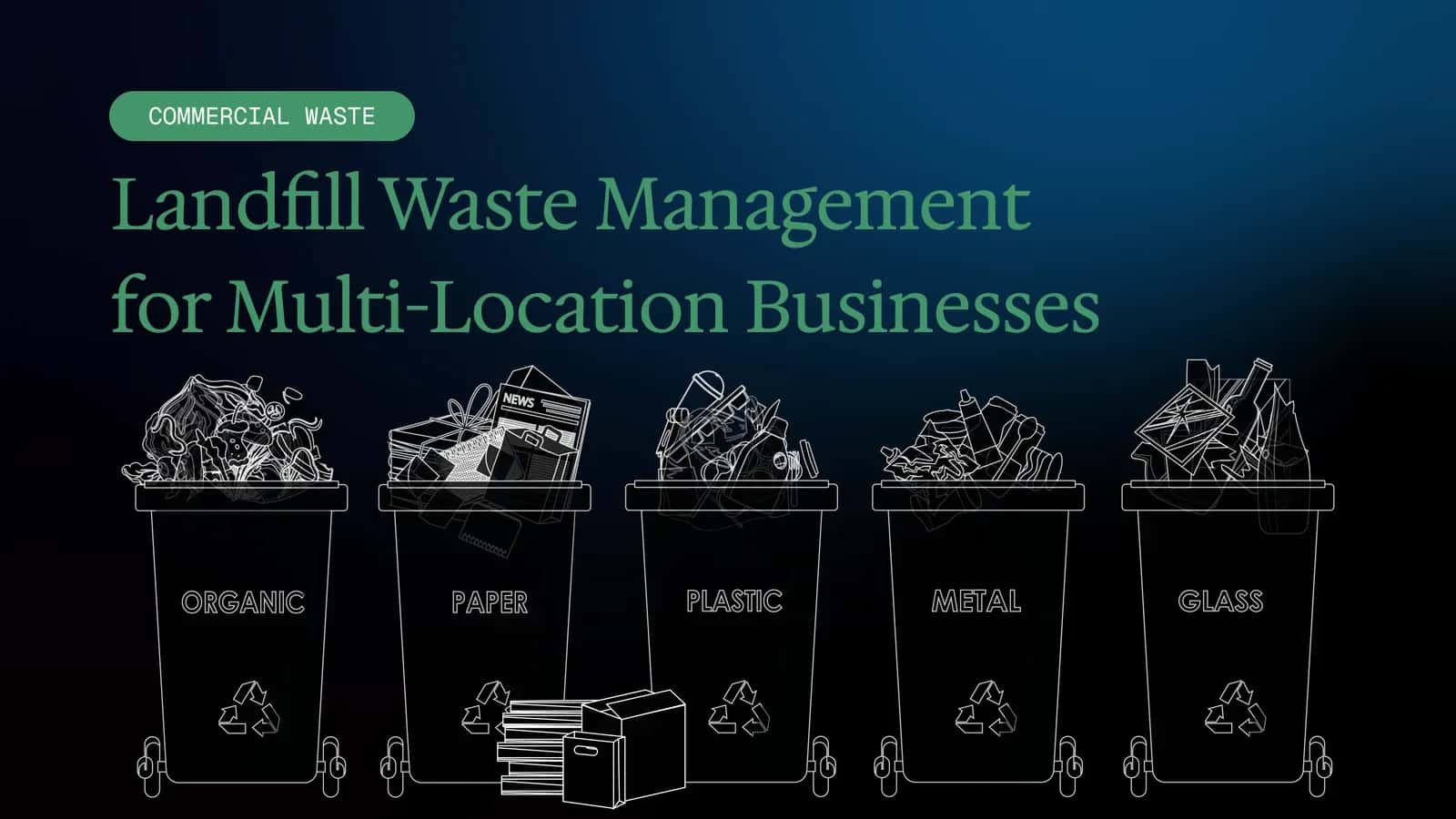
For a multi-site enterprise, landfill-bound material is an operating issue, not just a facilities task. Different locations may use different vendors, measure material in different units, and report results in incompatible formats. Without a shared baseline, leaders cannot tell whether a reduction program is working or whether a reported improvement reflects a change in measurement.
Landfill waste management is the coordinated process of measuring waste streams, reducing material sent to landfill, directing each stream to an appropriate recovery pathway, and documenting results with reliable operational data. For multi-location businesses, it connects site procedures, vendor controls, audits, chain-of-custody records, and verified ESG reporting.
Request an enterprise waste assessment to map your multi-location program.
This guide explains how sustainability, facilities, procurement, and compliance teams can build that operating framework. The emphasis is practical: establish a consistent baseline, prioritize reduction, control vendors, and make every portfolio-level result traceable to site and stream data.
What Does Landfill Waste Management Mean for an Enterprise?
For an enterprise, landfill waste management is the coordinated process of measuring, reducing, routing, and reporting material across a commercial portfolio. It is not simply arranging a service at each facility. It connects operational decisions, sustainability targets, compliance requirements, vendor oversight, and evidence showing where each waste stream went.
The landfill is only one part of the system. The U.S. Environmental Protection Agency describes modern landfills as engineered facilities subject to design, operating, and closure requirements under the Resource Conservation and Recovery Act. EPA guidance on landfills also distinguishes regulated materials that require more controlled handling. Enterprise teams should account for those requirements before material leaves a site.
Management begins before material leaves the facility
A collection-only model can show service activity, such as pickups or containers, without showing material composition or available alternatives. A management model starts with a clear view of waste streams across locations. It identifies where source reduction is possible, which materials can enter recycling or composting pathways, and which streams need specialized handling.
This distinction matters in a multi-site environment. Facilities may have different operating profiles, local requirements, vendors, and mixes of packaging, organics, construction material, and regulated material. A common framework preserves those local differences while giving the enterprise consistent definitions and decision rules.
Keep regulated materials separate
Regulated materials require a higher level of control. Hazardous waste should be managed through appropriately qualified channels and not mixed into general commercial streams based on appearance alone. Site procedures, vendor qualifications, and documentation should reflect each material's characteristics and applicable requirements. When the classification is uncertain, the responsible compliance team should determine the correct path before collection.
The result is a continuous management cycle: measure, plan, route, verify, and improve. The objective is not to promise that every material can be recovered. It is to make the landfill-bound portion visible, reduce it where practical, and document each remaining pathway.
Build a Waste Stream Baseline Across Every Facility
Reliable landfill waste management begins with a shared view of what each facility generates, where it goes, and how that information is recorded. A portfolio-wide baseline gives sustainability, facilities, procurement, finance, and compliance teams the same starting point.
Create a complete facility inventory
List every location in scope, including its address, facility type, operating profile, occupancy pattern, and primary site contact. Record current services, vendors, collection points, container types, service frequency, and known processing destinations. Include temporary sites and locations with unusual operating schedules when they affect the reporting boundary.
This inventory prevents a portfolio from being represented by a few unusually active or unusually small facilities. It also reveals gaps such as sites with no destination record, inconsistent service descriptions, or local contracts that do not provide the data required for enterprise reporting.
Use consistent stream definitions and units
For each facility, document the streams that matter to the operation. Depending on the site, those may include general solid waste, cardboard, mixed recyclables, organics, scrap metal, construction-related material, electronics, or regulated material. Use the same names and category definitions across the portfolio, while recording local requirements that change how a stream is handled.
Standardization matters because a container count at one site cannot be compared directly with a measured weight at another. Choose consistent units wherever possible and record the source of every value. If one vendor reports volume and another reports weight, preserve the original measure and document any conversion method instead of presenting an unqualified estimate.
Design audits to capture causes
A detailed audit should capture stream quantities, collection details, material composition, contamination observations, and operating conditions. Note where recyclable or compostable material enters the landfill-bound stream, whether container placement affects behavior, and which activities create unusual volumes. These observations turn a total into a diagnosis.
Use a consistent audit template, but leave room for site-specific findings. Define the scope, collection period, units, sampling approach, and limitations for every audit. Do not assign a fixed frequency without considering portfolio size, operating changes, regulatory needs, and reporting deadlines. For a deeper methodology, use the commercial waste audit guide.
Assign ownership before reporting
Name the owner for site data, vendor records, audit evidence, and portfolio review. Granular stream data supports accurate ESG reporting only when someone checks completeness and resolves exceptions. Establish who validates unusual changes, approves category definitions, and maintains the reporting source of truth.
How Landfill Waste Management Reduces Risk Across Facilities
A diversion plan turns a broad sustainability goal into a repeatable operating process. For multi-location landfill waste management, the plan must work across facilities while allowing for differences in building use, local markets, vendor coverage, and material volumes. The goal is a measurable path to reduce landfill-bound material through prevention, recovery, and better controls.
- Define the boundary. Set the facilities, regions, business units, service periods, and waste activities included in the program. Establish the baseline period and define total material generated, recovered material, contamination, and landfill-bound material. A shared boundary prevents sites from reporting different versions of the same result.
- Map the streams. Use audits and available service data to document what each facility generates, how it is measured, where it is collected, and where it currently goes. Capture material categories, container types, service frequency, contamination observations, and known restrictions.
- Prioritize prevention. Rank opportunities by volume, avoidability, contamination risk, cost, and operational effort. Preventing material at the source avoids downstream handling. Then identify streams that can move into commercial recycling services or composting where local infrastructure can support them.
- Assign appropriate pathways. Match each stream to a documented destination and define the controls that keep it in the correct pathway. Account for facility requirements, regional processing capacity, regulatory obligations, and vendor capabilities. Record decision rules so site teams can apply them consistently.
- Pilot before scaling. Select representative facilities with different operating conditions. Test signage, collection layouts, training, service schedules, vendor instructions, and data capture. Review participation, contamination, volume, service reliability, and cost before expanding the model.
- Measure and improve. Compare results with the baseline at a defined cadence. Investigate unexpected changes, validate vendor data, and document corrective actions. Scale what works, revise what does not, and maintain the same reporting method as the portfolio changes.
A plan is useful only when site teams can follow it. Give each facility a short operating standard that explains which streams are in scope, how containers are labeled, what evidence must be retained, and who handles exceptions. Central standards should make local execution easier, not add a second reporting process.
Talk with CheckSammy about a measurable landfill diversion plan for your facilities.
Control Vendors, Contracts, and Chain of Custody
At enterprise scale, landfill waste management depends on more than scheduling service. Procurement and operations teams need a control system that shows who handled each stream, what service occurred, where material was routed, and which evidence supports the record.
Qualify partners against operational evidence
Set vendor criteria that match the portfolio's streams, facility profiles, and compliance requirements. Review service coverage, escalation procedures, reporting capability, and experience coordinating across multiple locations. A qualified partner should provide usable service-level data, not only an invoice. Depending on the stream and contract, evidence may include collection dates, quantities or weights, destination facilities, certificates, photos, and exception notes.
Keep documentation tied to the site, stream, service event, and reporting period. A network of vetted providers can support coverage, but enterprise governance still requires a record of the route and outcome. Do not assume that every material follows the same pathway or that a vendor's standard report answers every internal reporting need.
Make exceptions visible
Contracts should define the information vendors must provide and the events that trigger an exception. Examples include missed service, rejected material, contamination, an unavailable processing facility, or a route that differs from the approved plan. The objective is not to hide variation. It is to identify the issue, assign ownership, document resolution, and prevent repetition across the portfolio.
Give procurement one accountable model
Central ownership reduces fragmented vendor management. A coordinated enterprise service model can consolidate relationships, standardize requirements, and provide data transparency across diverse streams. For organizations coordinating many facilities, commercial waste removal should be governed as a measurable operating program. Vendor oversight, routing evidence, and unified billing can work together while preserving the site and stream detail needed for review.
What Should Enterprise Waste Reports Include?
A useful enterprise report turns activity across multiple facilities into a consistent management view. It should show what each site generated, where each material went, how the result changed, and which evidence supports the figures.
Start with a reporting dictionary. Define each stream, unit of measure, reporting period, and method used to calculate the landfill-bound share. Keep landfill-bound material separate from recycling, composting, reuse, and other recovery pathways. Record whether figures come from measured weights, vendor records, modeled estimates, or another method.
Report fields by audience.
Audience.
Useful fields.
Decision supported.
Operations.
Site, stream, weight or volume, service date, exceptions, contamination notes.
Adjust collection practices and prioritize facility action.
Sustainability and ESG.
Landfill-bound share, recovery method, period trend, methodology, supporting records.
Prepare defensible reporting and assess progress.
Procurement.
Vendor, service scope, facility coverage, stream coverage, invoice reference, data completeness.
Govern contracts and compare service performance.
Compliance.
Material classification, destination facility, transfer or processing evidence, exceptions, review status.
Verify approved pathways and support audit readiness.
Preserve both portfolio and site-level views. A corporate total helps leadership track progress, while location detail reveals contamination, service gaps, and facilities needing a different plan. Rollups should show the reporting period, included sites, exclusions, and assumptions before presenting the total.
Evidence should sit close to the reported result. Depending on the stream and service, that may include weight records, vendor documentation, destination information, certificates, or exception logs. Reports should identify missing records and unresolved caveats. A transparent limitation is more credible than a complete-looking figure that cannot be verified.
How Technology Supports Multi-Location Waste Management
Managing landfill-bound material across a large portfolio requires more than collecting invoices from individual facilities. Operations, procurement, and sustainability teams need a consistent view of what is happening at each location, across each stream, and over time.
Technology can bring information from multiple sites into one reporting environment. CheckSammy describes its platform as combining operational coordination with chain-of-custody visibility, verified measurements, and reporting support. Its ZeroPoint Facilities model provides an example of how owned infrastructure can connect material handling with evidence about outcomes. Explore ZeroPoint Facilities to understand that facility network in more detail.
Aggregate data without losing site detail
A useful enterprise system must roll information up for portfolio decisions and preserve the detail needed to understand individual facilities. Aggregated data can support sustainability reporting, while stream-level visibility helps teams identify contamination, limited recovery access, or different service patterns at one location.
Make information easier to verify
Real-time visibility can help stakeholders identify exceptions sooner than periodic manual reporting. The value is not a dashboard for its own sake. The value is a clearer basis for checking service activity, connecting local results to sustainability objectives, and deciding where an operating change is needed.
Turn Landfill Data Into Continuous Improvement
A landfill program should produce decisions, not just a monthly number. Review results with operations, sustainability, procurement, and compliance together so each team can connect the same source data to its own responsibility.
Investigate the cause behind the number
When landfill-bound material rises, ask what changed. The cause may be a new facility, a seasonal operating pattern, a service interruption, contamination, a vendor reporting change, or a genuine increase in material generation. Separate measurement changes from operational changes before updating the baseline or declaring a performance decline.
Test improvements, then scale
Use representative facilities to test container placement, signage, training, collection schedules, vendor instructions, or procurement changes. Set a review period and document the result. If a change reduces landfill-bound material without creating unacceptable contamination or service friction, incorporate it into the enterprise standard and repeat the review at additional locations.
Keep a decision log that records the issue, evidence reviewed, action taken, owner, and follow-up date. This simple discipline helps a new facilities manager understand why a pathway exists and gives sustainability teams a clear record when reporting methods or site conditions change.
Frequently Asked Questions
What is the difference between waste management and landfill waste management?
Waste management covers the full system for handling material. Landfill waste management focuses specifically on measuring and reducing the portion sent to landfill, selecting appropriate recovery pathways, controlling vendors, and documenting the outcome. A strong program considers the entire stream so leaders can understand both recovered and landfill-bound material.
How can a company measure landfill-bound waste across multiple facilities?
Start with a facility inventory and shared stream definitions. Collect weights when available, retain original vendor measurements, document any conversions, and identify whether each figure is measured or estimated. Roll results up only after checking the reporting boundary, units, facility list, and treatment of missing data.
What should a landfill diversion plan include?
It should define the portfolio boundary, map material streams, prioritize source reduction, assign documented pathways, set vendor and evidence controls, pilot operational changes, and establish a review cadence. The plan should also name owners for site execution, data validation, exceptions, and enterprise reporting.
Why are chain-of-custody records important?
Chain-of-custody records connect a material stream to its service event, destination, and supporting evidence. They help teams identify exceptions, evaluate vendor performance, explain reported outcomes, and distinguish verified results from assumptions. The level of documentation should match the stream, risk, and reporting requirement.
How often should an enterprise review its landfill program?
Review cadence should reflect the portfolio, material volumes, operating changes, vendor agreements, and reporting deadlines. Monthly or quarterly portfolio reviews can identify trends, while site audits and exception reviews may happen on a different schedule. The important point is to define the cadence and record the reason for changes.
Request an enterprise waste assessment to build a more verifiable multi-location program.