Retail Waste Management for Multi-Location Brands: Guide
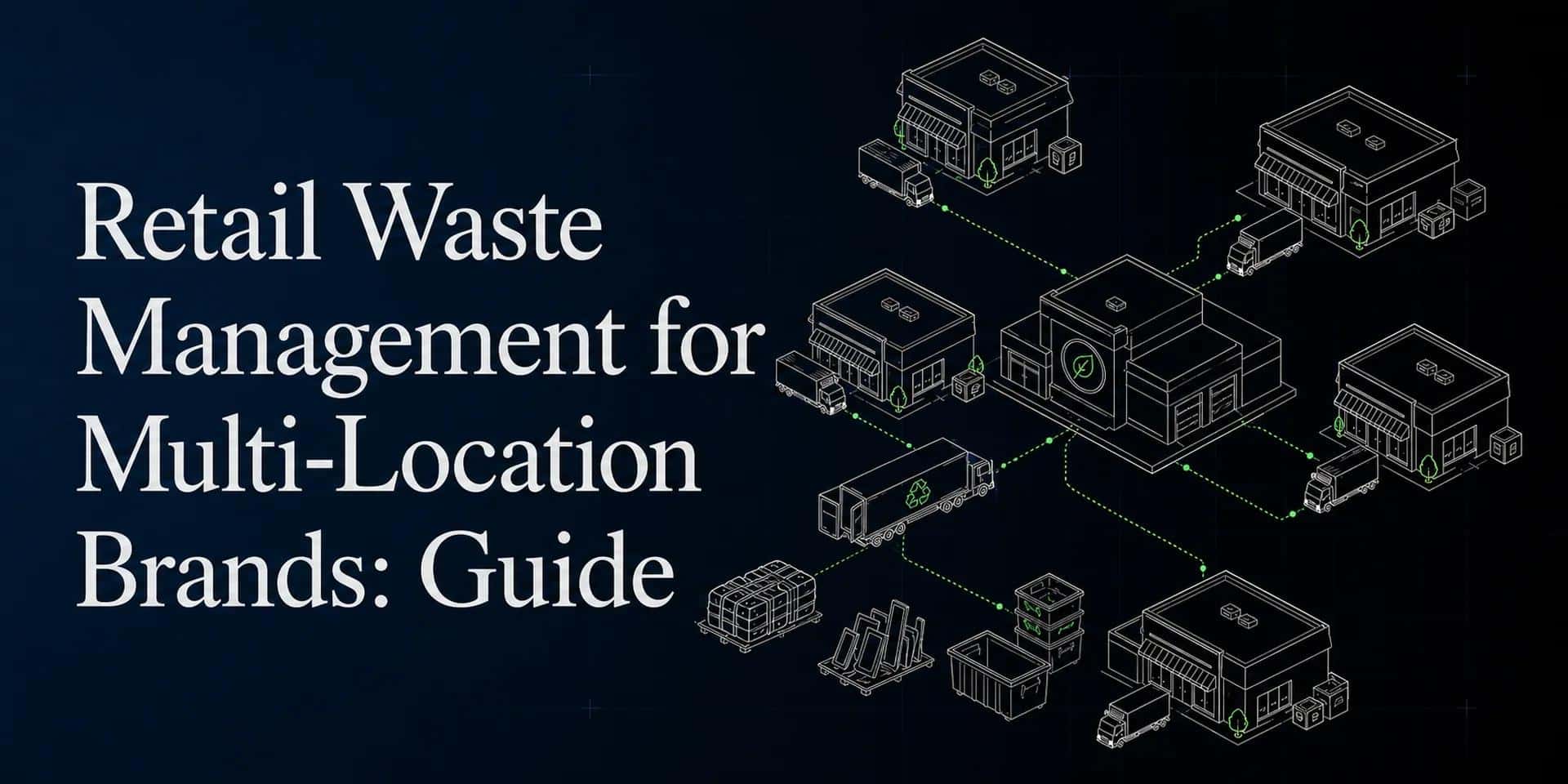
Retail waste management gets harder with every new store, remodel, return, and local vendor. The problem is not only the volume of material. It is coordinating pickups without disrupting store operations, finding responsible outlets for different material streams, and producing reliable portfolio-wide data after the work is done. A scalable program gives operations and sustainability teams one repeatable way to manage everyday packaging, bulky fixtures, remodel debris, and returned products across hundreds or thousands of locations.
Talk with CheckSammy about a nationwide retail waste management program.
What Is Retail Waste Management?
Retail waste management is the coordinated collection, sorting, recovery, recycling, donation, destruction, and disposal of materials generated by retail operations. For multi-location brands, it also includes vendor coordination, service documentation, chain-of-custody records, and reporting across the entire store portfolio.
A strong program covers both predictable and event-driven work. Predictable streams may include cardboard, plastic film, pallets, and damaged merchandise. Event-driven projects include store openings, remodels, seasonal resets, fixture replacements, closures, and product recalls. Each requires different equipment, timing, and disposition paths.
The operating goal is straightforward: remove materials on schedule, keep stores safe and uncluttered, recover as much value as practical, and give decision-makers evidence of what happened to every load.
Why Multi-Location Retail Waste Is Difficult to Control
A retailer can have a clear sustainability policy at headquarters and still get inconsistent results at store level. Local infrastructure varies. Storage space is limited. Store teams have other priorities. A pickup that works for one location may be impossible at another because of dock access, mall rules, service windows, or material volume.
Common problems tend to compound as the store network grows:
- Fragmented vendors:Every market may have different contacts, rates, service standards, and documentation.
- Inconsistent disposition:The same fixture or packaging stream may be recycled in one region and landfilled in another.
- Limited visibility:Operations teams may not know whether a pickup was completed until a store escalates the issue.
- Reporting gaps:Weight tickets, photos, invoices, and diversion records arrive in different formats or not at all.
- Unplanned volume:Promotions, resets, returns, and closures can create sudden material surges that routine service cannot absorb.
These are portfolio-management problems. Adding more local haulers rarely solves them. Retailers need a consistent service model that can adapt to site-level conditions while preserving centralized oversight.
Map the Material Streams Before Choosing Services
Start with a material-stream map rather than a list of vendors. The map should show what stores generate, when they generate it, how it is stored, and which disposition path is preferred. This prevents a common mistake: treating every item as mixed waste because the collection plan was designed before anyone understood the materials.
- Cardboard, film, and packaging:Typical source:Receiving and replenishment;Preferred planning question:Can staff separate it consistently without consuming selling or storage space?
- Shelving, displays, and fixtures:Typical source:Remodels, resets, and closures;Preferred planning question:Which items can be reused, donated, recycled, or need disposal?
- Construction and remodel debris:Typical source:Renovations and refreshes;Preferred planning question:What equipment and service windows fit the site?
- Returned and damaged products:Typical source:Customer returns and reverse logistics;Preferred planning question:Should each item be resold, donated, recycled, or destroyed?
- Electronics and store equipment:Typical source:Technology refreshes;Preferred planning question:Are secure handling and documented downstream processing required?
- Pallets, crates, and bulky overflow:Typical source:Deliveries and peak seasons;Preferred planning question:Is recurring service enough, or is on-demand capacity needed?
Once the streams are visible, teams can set a disposition hierarchy. Reuse and recommerce may preserve value. Donation can extend product life. Recycling can recover constituent materials. Destruction or disposal should be reserved for items with safety, brand-protection, compliance, or material limitations.
For recurring store materials, CheckSammy'scommercial recycling servicesconnect collection with material tracking and verified reporting.
Build a Repeatable Strategy for Every Retail Waste Scenario
1. Plan store remodel debris before work begins
Remodels often produce old shelving, millwork, flooring, displays, packaging, and mixed construction debris in a short window. If removal is planned after demolition begins, stores may lose staging space and contractors may default to the fastest disposal option.
Add waste planning to the remodel schedule. Define anticipated materials, estimated volumes, site access, loading rules, pickup windows, and the person authorized to confirm completion. Separate reusable or recyclable fixtures before they are damaged or mixed with debris. A repeatable scope makes the next wave of remodels easier to price, schedule, and report.
2. Treat fixture removal as a logistics project
Fixtures are bulky, variable, and often spread across many locations at once. A seasonal display removal or national brand refresh can overwhelm receiving rooms if local stores must find their own solution.
Centralize the work order, but collect site-specific details such as dimensions, quantities, stairs, dock availability, and mall restrictions. Use photo documentation to reduce ambiguity before dispatch. Then route fixtures according to condition and material: reuse, donation, component recovery, recycling, or disposal.
Explore nationwide commercial waste removal for fixtures, remodel debris, and bulky retail materials.
3. Make packaging separation practical for store teams
Cardboard and plastic packaging may be consistent across a retail portfolio, but local execution depends on space and labor. A collection system that blocks a receiving area or requires complicated sorting will fail during busy periods.
Design the process around how materials move through each store. Place collection points where unpacking happens, keep instructions short, and assign ownership by role rather than by employee name. Monitor contamination and overflow by location. Stores with repeated issues may need different containers, pickup frequency, or training.
4. Give returns a defined disposition path
Product returns should not automatically enter the waste stream. Returned and damaged inventory can have several outcomes, including recommerce, donation, recycling, or certified destruction. The right path depends on condition, product category, resale restrictions, brand requirements, and recoverable material value.
A controlledproduct returns programcreates a chain of custody from receipt through final disposition. This gives retail teams visibility into each unit while helping sustainability, finance, and compliance stakeholders understand the outcome.
5. Keep on-demand capacity available
Recurring collection is essential, but retail operations are not completely predictable. Storm damage, illegal dumping, delayed construction, product recalls, and seasonal peaks create urgent needs. Define an escalation path before one is needed. Store teams should know how to request service, what information to provide, and where to see status.
On-demand capacity also helps protect the customer experience. Bulky waste near a storefront, blocked back rooms, and overflowing receiving areas can create safety concerns and disrupt normal operations. Rapid, documented service keeps an isolated problem from becoming a regional operations issue.
How Can Retailers Manage Waste Vendors Across Hundreds of Stores?
Multi-location retailers can manage waste vendors more effectively by consolidating requests, status tracking, documentation, and reporting through one accountable service model. Local execution still matters, but headquarters should not have to reconcile hundreds of disconnected vendor relationships to understand performance.
A scalable operating model should include:
- One intake process:Standardize required information for every service request, including photos, material type, estimated volume, access details, and deadline.
- Consistent scopes:Define what completion means for recurring pickups, remodels, closures, returns, and emergency work.
- Central status visibility:Let authorized teams see scheduled, dispatched, completed, and exception work without contacting each store.
- Documented completion:Capture photos, timestamps, weights when available, and disposition records.
- Exception management:Flag missed access, unexpected materials, contamination, and other issues while there is still time to act.
- Unified reporting:Aggregate service and diversion results across locations, regions, projects, and material streams.
This model reduces the administrative burden on store managers and gives procurement a clearer view of service consistency. It also makes it easier to compare regions without confusing a lack of documentation with a lack of performance.
Use One Dashboard to Connect Operations and Sustainability
Retail waste data is useful only when teams can act on it. An operations leader may need to know which pickups are late. Procurement may need cost and vendor performance. Sustainability may need weights, diversion rates, and disposition evidence. A shared dashboard connects those views without forcing each function to build a separate reporting process.
CheckSammy'stechnology platformprovides real-time tracking and auditable chain-of-custody visibility from pickup to disposition. For multi-location retail programs, that creates a consistent record across routine work and one-time projects.
Useful retail waste management metrics include:
- Service completion rate and time to completion
- First-visit completion rate
- Material weight or volume by stream
- Diversion rate by store, region, project, and material
- Exceptions, contamination, and missed-access events
- Cost by service type and location
- Availability of photos, tickets, certificates, and other supporting records
Verified data matters because estimates can hide weak execution. CheckSammy reports a 94% average diversion rate, verified through state-certified scales when applicable, and a 99.2% first-visit completion rate. Those measures connect sustainability outcomes with the operational reliability that retail teams need.
Request a demo to see how CheckSammy manages service and diversion data across retail locations.
A Practical Retail Waste Management Rollout Plan
A national program does not need to launch everywhere at once. A controlled rollout creates a better baseline and exposes regional differences before they affect the whole portfolio.
- Define the scope.Choose the first material streams and business events to address. Routine cardboard, fixtures from a reset, and returned products may require separate workflows.
- Establish the baseline.Record current vendors, costs, service frequency, material volumes, diversion evidence, and recurring complaints.
- Select a representative pilot.Include different store formats, market types, access conditions, and waste volumes.
- Set operating standards.Document intake requirements, service windows, store responsibilities, completion criteria, and escalation steps.
- Track exceptions closely.Use pilot issues to refine the program rather than treating every problem as a one-off event.
- Expand in waves.Group locations in a way that supports training, communications, and performance review.
- Review the data.Compare service reliability, cost, diversion, and documentation quality to the baseline.
The best rollout is designed for store adoption. Limit extra work for local teams, make the request process easy, and return useful status information quickly. Headquarters gains control only when stores see the process as a practical improvement.
Questions to Ask a Retail Waste Management Partner
A prospective partner should be able to explain how it handles both physical service and the data created by that service. Ask questions that reveal what happens when conditions vary across locations:
- Can you support recurring, on-demand, and multi-location project work?
- How do you handle remodel debris, fixtures, packaging, returned products, and other distinct material streams?
- What information can store teams and headquarters see before, during, and after service?
- How is chain of custody documented?
- How are weights and diversion outcomes verified?
- Can reporting be segmented by store, region, project, and material?
- What happens when a pickup encounters unexpected materials or access problems?
- How do you keep service standards consistent across North America?
CheckSammy combines nationwide service coverage, a network of more than 10,000 vetted professionals and 25,000 facilities, ZeroPoint Facilities, and auditable data. Retailers can use one partner to coordinate removal, recovery, and reporting across complex portfolios.
Frequently Asked Questions About Retail Waste Management
What types of waste do retail stores generate?
Retail stores commonly generate cardboard, plastic film, pallets, damaged merchandise, returned products, electronics, fixtures, displays, and remodel debris. The mix changes by store format, season, and project activity, so each stream needs an appropriate collection and disposition plan.
How can retailers improve landfill diversion across many locations?
Retailers can improve diversion by mapping material streams, setting preferred disposition paths, making separation practical for store teams, using consistent service scopes, and verifying outcomes with weights and chain-of-custody documentation. Portfolio-wide reporting helps identify stores and streams that need attention.
Why consolidate retail waste management vendors?
Consolidation gives headquarters one process for requesting service, tracking completion, resolving exceptions, and reviewing reports. It reduces the burden of managing disconnected local vendors while preserving local service execution.
How should retailers handle fixtures and remodel debris?
Plan removal before work begins, document quantities and site access, separate reusable or recoverable items, and schedule collections around the remodel timeline. Fixtures can often follow different paths based on condition and material instead of being handled as mixed debris.
Turn Retail Waste Into a Managed Portfolio
Retail waste management works best when it is treated as an operating system, not a series of pickups. A consistent program connects store-level execution with centralized standards, nationwide service, clear chain of custody, and verified diversion data. That structure helps retail teams handle routine packaging, remodel debris, fixture removal, returns, and urgent needs without losing visibility as the portfolio grows.
Contact CheckSammyto build a retail waste management program that supports store operations and measurable sustainability outcomes across North America.