Commercial Construction Debris Recycling: A B2B Guide
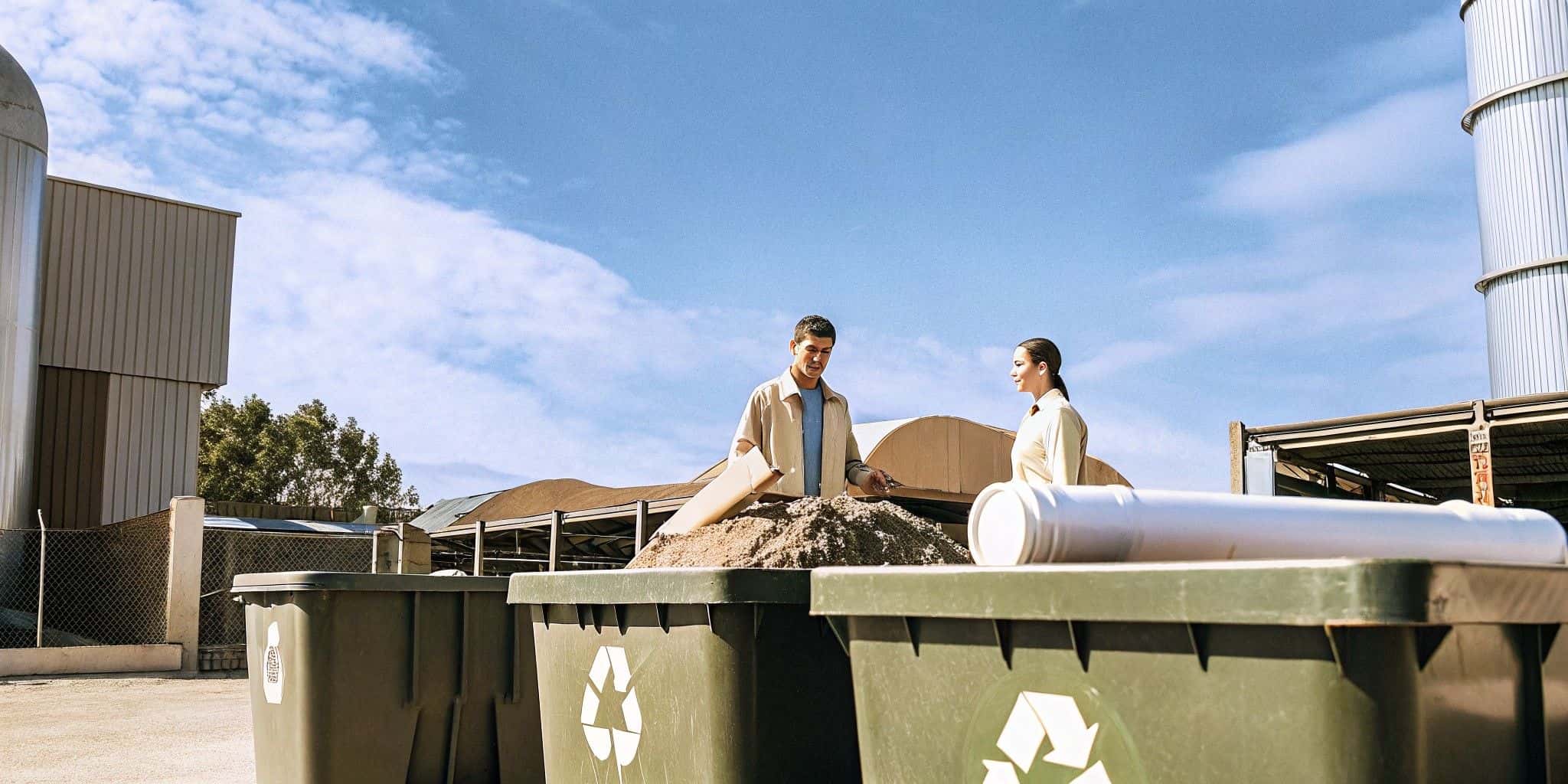
Commercial construction sites produce a massive volume of waste, but most of these materials do not belong in a landfill.
Commercial construction debris recycling is the process of sorting, recovering, and processing building materials like concrete, wood, metal, and drywall from construction sites to divert them from landfills. According to the U.S. Environmental Protection Agency (EPA), building activities alone generate about 136 million tons of debris every year. Companies like CheckSammy help builders organize this process with smart hauling plans, real-time tracking, and specialized logistics hubs that sort and route materials to recycling facilities. By focusing on diversion, commercial projects can reduce high disposal costs, meet local green building rules, and keep valuable raw materials in the production cycle.
Managing these massive material streams requires a clear understanding of the process from start to finish. Let us look closely at What Is Commercial Construction Debris Recycling? and how your business can use it to build a better, more cost-effective waste plan.
What Is Commercial Construction Debris Recycling?
Commercial construction debris recycling is the process of collecting, sorting, and reclaiming materials left over from building, remodeling, or tearing down commercial structures. Rather than sending these valuable resources to landfills, modern builders redirect them back into the supply chain. This practice is vital because construction and demolition (C&D) debris accounts for a massive portion of solid waste. In fact, a study by the U.S. Environmental Protection Agency (EPA) shows that the nation generates about 136 million tons of building-related C&D waste each year from building work alone. Managing these streams requires a smart, tech-enabled strategy to turn waste into reusable resources.
Types of Recyclable Construction Materials
Most materials from a commercial job site are highly recyclable when contractors keep them separate from other waste. The list of salvageable items is long and includes heavy materials like concrete, bricks, and masonry. It also includes lumber, drywall, steel, aluminum, glass, and plastics. Even asphalt roofing shingles, insulation, and vinyl siding can be processed and reused. When handled correctly, these raw materials are denailed, crushed, or melted down to make new products. This cycle reduces the need to extract fresh raw materials from the earth, which lowers the overall environmental footprint of the sector.
How Commercial Debris Differs from Residential Waste
Commercial construction debris differs from residential waste in both scale and makeup. Home projects tend to produce small, mixed loads of waste over short periods. In contrast, commercial sites generate vast quantities of specific, heavy materials over several months. A large commercial build uses massive steel beams, extensive concrete foundations, and specialized electrical and plumbing systems. These materials are highly uniform, which makes them prime candidates for construction debris recycling. Because commercial waste streams are so large, they cannot be handled with basic retail methods. They require specialized industrial logistics to keep things moving safely and efficiently.
The Tech-Enabled Approach to Commercial Diversion
Traditional waste services focus on simple removal and disposal, which often leads to high landfill fees and lost recycling opportunities. CheckSammy operates as an end-to-end, tech-enabled partner that combines physical work, real-time data, and verified outcomes. Using advanced logistics, we track your material streams from the moment they leave your job site. This modern method gives commercial entities the deep data they need to meet strict corporate goals. We use a vast network of professional haulers and processing sites. This ensures your concrete, wood, and metal go to sorting facilities rather than a dump. This smart system turns a complex waste challenge into a clear, auditable win for your business.
Why Commercial Construction Debris Recycling Matters
Managing building waste on a commercial job site is more than an operational chore. Choosing construction debris recycling over landfill dumping shapes both your budget and your brand. Today, leading enterprises view material recovery as a strategic move rather than a standard task. It provides a clear path to control costs, meet legal rules, and hit corporate goals.
Financial Benefits and Cost Savings
Reducing project costs is the most immediate reason to set up a recycling program. Moving materials away from landfills lets you avoid high tipping fees and disposal costs. In fact, smart waste management plans can lead to a 30% to 40% cost reduction when compared to traditional, unoptimized waste hauling services. These financial gains come from several sources on the job site.
Traditional disposal vs commercial construction debris recycling
Factor
Landfill disposal
Debris recycling
Cost per project
High tipping fees
30-40% lower costs
Material value
Lost to dump
Recovered or sold
ESG data
No tracking
Verified diversion rates
LEED points
Not eligible
Supports certification
Compliance risk
Higher with bans
Lower with certified partners
First, avoiding landfill fees keeps more capital in your project budget. Second, separating materials like clean lumber or metal lets you salvage them for other uses, which decreases the purchase of new raw materials. Third, selling clean metals or cardboard can generate direct revenue for your team. The United States Environmental Protection Agency (EPA) notes that recovering materials in this way lowers total project costs. As shown in their guide on sustainable management of construction materials on nepis.epa.gov.
Regulatory Compliance and Policy Alignment
Local and state laws are changing how commercial builders handle waste. Many states and cities now use disposal bans and high tipping fees to keep building materials out of local landfills. These local rules often target heavy, bulky items like concrete, wood, and metal. Failing to meet these local codes can lead to costly project delays, fines, or lost permits. Building owners can find tools to help them comply on the EPA website.
Working with a professional diversion partner ensures you stay in line with these local laws. By separating and recycling materials, contractors can navigate complex local rules without adding labor to their teams. This proactive stance keeps your job site compliant and prevents unexpected costs from code violations.
ESG Reporting and Environmental Benefits
Modern enterprises must show a clear commitment to environmental stewardship. Standard waste reports are no longer enough for investors or corporate leaders. Diverting building waste from landfills directly supports Environmental, Social, and Governance (ESG) goals. These actions help contractors and building owners comply with local policies and meet aggressive corporate recycling targets, as explained on nepis.epa.gov.
Every ton of concrete, wood, or steel you recycle reduces the need to extract and process new raw materials. This conservation effort lowers the carbon footprint of your entire project. Partnering with a tech-enabled waste provider gives you the verified data and metrics you need to prove these savings to your stakeholders.
How to Sort Construction Debris On-Site for Maximum Recycling
Organizing material streams directly on the job site is the most efficient way to handle commercial waste. When you separate materials at the source, you ensure that valuable items do not end up in landfills. This practice lowers your tipping fees and keeps your project compliant with local green build rules.
The Challenge of Contamination
Contamination is the number-one obstacle to efficient recycling on commercial sites. According to the U.S. Environmental Protection Agency (EPA), recyclables must be kept separate from actual trash, nails, and broken glass to remain useful. When trash mixes with clean wood or concrete, the whole batch often becomes unrecyclable waste. This mistake increases your costs and ruins your sustainability metrics.
A Clear On-Site Sorting Plan
Contractors can prevent contamination and boost diversion rates by following five structured steps on the job site.
- Analyze your waste streams before you start. Look at your project plans to estimate the types and amounts of debris you will generate. This forecast helps you plan the right number of containers and pick the best locations for them.
- Set up labeled separation containers. Place clearly marked roll-off bins in high-traffic work zones. Using labeled bins for source-separated materials is a proven, cost-effective way to manage commercial construction debris recycling. Keep wood, metal, drywall, and concrete in their own designated bins.
- Train your crews on contamination rules. Teach all workers and subcontractors which materials go into each container. Use simple, bilingual signs with pictures on every bin to prevent mistakes and keep trash out of recycling streams.
- Track container levels in real time. Use smart logistics and sensor tools to monitor container levels. Real-time data and tracking help you optimize your pickup schedules so you only pay for haulers when bins are completely full.
- Work with a professional materials processor. If your job site is too small for multiple bins, send your mixed loads to a sorting partner. Contractors often use specialized processing firms to sort mixed debris and achieve high diversion rates.
Smart Logistics Drive Better ROI
On-site sorting works best when it is paired with smart scheduling. When you monitor your bins, you avoid empty trips and lower your carbon footprint. This structured approach helps your team meet strict ESG goals and keeps your project on budget.
Chain-of-Custody Documentation and LEED Compliance for Construction Debris
Enterprise building projects face strict green standards. To earn key points under the Leadership in Energy and Environmental Design (LEED) system, you must prove where your building waste goes. Traditional haulers often fail here. They only give rough guesses or broad estimates of your waste weight. True sustainability and environmental, social, and governance (ESG) reporting need a much better approach. You need real-time data trails that show exactly how your waste is handled from the job site to the final sorting center.
A clear, secure paper trail is the only way to verify your green claims. When you recycle building materials, every step must be tracked and written down. This deep tracking is what keeps your project in line with both local rules and global ESG goals. With a clear data trail, your business can confidently show its landfill diversion success to clients, partners, and green building teams.
LEED Documentation Requirements
To secure green building points, you must show proof of weight-based diversion. The U.S. Environmental Protection Agency (EPA) notes that clear planning is key to cutting down on project waste. For LEED certification, you cannot rely on simple visual guesses. You must have official scale tickets from certified sorting sites. These scale tickets prove the exact weight of the concrete, wood, metal, and other debris that you divert from landfills.
Having a solid chain of custody ensures that your team has all the paperwork ready for review. This tracking follows your waste from the moment it leaves your site. The material is monitored during transit and all the way through final sorting. CheckSammy uses its own network of ZeroPoint Facilities to sort, aggregate, and route these complex material streams. This setup gives you a single, clear path of data for every load of waste you ship.
Verified vs Estimated Data
Most traditional waste haulers only give broad weight estimates. These guesses are not enough for formal green building audits. Working with an end-to-end, tech-enabled partner gives you the real, verified data you need. Your green claims should always be backed by hard proof. CheckSammy delivers a 94% average diversion rate that is verified through state-certified scales. This precise measurement removes all guesswork and ensures your records can pass any green audit.
In addition to scale tickets, modern green projects need precise carbon tracking. Our system provides EPA-aligned carbon calculations to help you measure the direct impact of your construction debris recycling efforts. These verified numbers let facility managers show real sustainability results. Instead of hoping your hauler did the right thing, you get absolute proof. Every pound of diverted wood, metal, or concrete is tracked, weighed, and recorded for your peace of mind.
How CheckSammy ZeroPoint Facilities Process Construction Materials
Managing debris on a job site is a major task. Traditional haulers often move mixed loads straight to the landfill. This practice drives up costs and hurts your sustainability goals. CheckSammy works as an end-to-end, tech-enabled partner to change this process. Our specialized infrastructure turns mixed debris into sorted, useful resource streams. This method makes commercial construction debris recycling efficient and highly accurate.
What Are ZeroPoint Facilities?
Our proprietary ZeroPoint Facilities serve as dedicated sustainability logistics hubs. They form the core of our recycling network. These spaces are built to handle the complex material streams that modern building projects produce. Instead of simple dump-and-run tactics, we route mixed debris to these central hubs for close sorting and consolidation.
At these hubs, we separate recyclable items like concrete, wood, drywall, and metals. Our team filters out contaminants that would otherwise block the recycling process. This active sorting ensures that clean materials go directly to verified secondary markets instead of landfills. By combining logistics and hands-on sorting, we keep valuable resources in the circular economy.
Sort, Aggregate, and Route Material Streams
Processing bulky debris requires scale and organization. Our logistics hubs sort materials by type. We then aggregate similar items into bulk loads. This grouping makes transport and processing more cost-effective. Once grouped, we route each stream to the best local recovery facility.
This organized method works across our entire network. CheckSammy offers nationwide service across all 50 states and 10 Canadian provinces. This broad reach allows large enterprises with multi-location projects to standardize their recovery programs. It also ensures consistent operational quality on every job site, regardless of location.
Verified Diversion Versus Simple Estimates
Many traditional haulers offer basic estimates of your recycling rates. These guesses do not hold up during audits. CheckSammy replaces guessing with real, auditable proof. We track each load from the point of pickup to its final home. This tracking gives you a complete chain of custody for your ESG reporting.
We weigh materials on state-certified scales whenever possible to verify actual diversion. This data-driven approach supports your LEED and corporate green goals. It gives facility managers the verified metrics they need to show true progress to stakeholders and regulatory bodies.
Lowering Costs While Saving Resources
Sustainable debris management does not have to cost more. In fact, a smarter recovery strategy can lower your overall expenses. By diverting materials from landfills, you avoid high tipping and disposal fees. Grouping materials also helps us optimize hauling routes and schedules.
Our optimized recovery strategy can reduce your waste-related costs by 30-40% compared to traditional, unoptimized haulers. This dual benefit of lower costs and verified diversion makes sustainability highly practical. You get a reliable partner, clear data tracking, and real savings on every project.
Measuring Commercial Construction Debris Diversion Success
Many commercial building projects rely on broad estimates to measure their recycling success. But real success in commercial construction waste recycling comes from hard data. When building managers and builders want to prove the impact of their waste programs, they must track true numbers. Working with a partner that uses weight-based tracking is the best way to get these facts.
Tracking Real Diversion Rates
The core of any waste plan is the diversion rate. This is the share of material saved from a landfill. CheckSammy delivers a 94% average diversion rate on these projects. Rather than using guesses, these rates are verified through state-certified scales when possible. This process ensures that every ton of concrete, wood, or metal is weighed and logged. Having real scale data means you can trust your green metrics.
Standard Reporting Templates
Sharing green data with partners or owners can be hard. Using standardized reporting templates makes this work simple. These files help facility managers show clear results to company leaders and investors. They outline how much material was saved, where it went, and what it cost. Clear templates show exact proof of your operational success. This clear data keeps your teams and partners aligned.
Tying Metrics into ESG Goals
Green building data is now a key part of corporate reports. Today, many firms must share environmental, social, and governance (ESG) progress. Waste metrics tie directly into these disclosures. Builders can track direct carbon impact using EPA-aligned carbon calculations to show progress. This helps prove that your corporate goals are being met. It changes raw waste tons into clear carbon metrics that stakeholders can easily understand.
Relying on Operational Metrics
A great green plan still needs to run smoothly on the job site. Builders must know that material will be hauled away on time. Timely service prevents job site delays. CheckSammy supports this with a 99.2% first-visit completion rate. This operational score shows that pickups are done right the first time. Real data and high reliability make your green goals easy to reach.
Frequently Asked Questions
What materials are included in commercial construction debris recycling?
Commercial construction debris recycling covers a wide range of building materials. According to the EPA, these include concrete, lumber, drywall, and metals. They also include bricks, masonry, glass, plastics, and roofing materials. These items are highly recyclable when they are properly separated from contaminants on the job site.
How does recycling debris help reduce commercial project costs?
Recycling debris lowers costs by letting you avoid high landfill fees. Standardizing these sustainable logistics can reduce waste-related expenses by 30% to 40% compared with traditional hauling. You can also save money by using salvaged items or selling them. This keeps projects on budget while meeting your sustainability goals.
Why is commercial construction debris recycling important for ESG reporting?
Diverting C&D waste from landfills provides verified data for environmental, social, and governance reporting. CheckSammy uses real-time tracking to build an auditable chain of custody. This process gives you EPA-aligned carbon calculations. It helps your company prove its progress toward zero-waste goals and show compliance with local recycling rules.
How do commercial projects achieve high waste diversion rates?
High diversion rates require careful planning and sorting. Many contractors use labeled, open-top roll-off containers to separate materials on-site. If space is tight, processing firms can sort the materials for you. CheckSammy routes these complex streams to ZeroPoint Facilities to achieve a verified 94% average diversion rate.
Ready to optimize your project diversion rates?
Delaying your recycling plan leads to higher haul costs and missed compliance dates. Let our waste experts help you hit your green goals with clear data and zero hassle. We handle your bulk sorting and provide full tracking from start to finish.
Ready to schedule a free consultation for commercial construction debris recycling services? Contact CheckSammy to start today.