Extended Producer Responsibility (EPR) is moving quickly from a policy discussion to something you’ll feel inside your operations. If you manufacture, distribute, or sell products or packaging across multiple regions, EPR is no longer a future sustainability issue. It’s becoming a business requirement that affects how materials move, how data is reported, and how risk is managed.
EPR is driving a broader shift toward accountability for products and packaging across their full lifecycle.
In the United States, the rollout can feel uneven. Requirements vary by jurisdiction, timelines differ, and early programs often focus on a narrow set of materials or reporting obligations. That seeming simplicity can make it easy to underestimate what comes next.
In more mature markets, EPR has expanded rapidly, covering more materials, demanding more detailed reporting, and tying real financial and compliance consequences to how products are managed after sale. That same direction is taking shape in the U.S. as regulations continue to evolve.
What EPR Is and Why It Matters Now
What Extended Producer Responsibility Changes
Extended Producer Responsibility shifts accountability for products and packaging beyond the point of sale. Under EPR laws, producers are responsible for how materials are managed after the consumer is done with them, including collection, recycling, and reporting, introducing circularity into how materials move through the system. That accountability now sits with producers rather than municipalities or consumers.
In many EPR programs, that responsibility shows up through mechanisms like take-back programs, where products and packaging come back to producers in mixed conditions and inconsistent volumes. What was once largely voluntary is increasingly enforced through formal EPR programs and regulations.
How EPR Reshapes Business Accountability
For companies, this shift pulls accountability for post-consumer outcomes into centralized enterprise functions that historically weren’t responsible for end-of-life outcomes. EPR isn’t just a sustainability issue. It directly affects procurement, logistics, finance, and compliance.
To manage that responsibility, EPR programs formalize reporting and documentation requirements and are often administered through Producer Responsibility Organizations (PROs), which handle registration, reporting, and fee structures for producers. Fees are typically tied to material types and recyclability, increasing the importance of accurate material classification and defensible reporting.
Where EPR Is Established – and What That Signals
Adoption of EPR policies has accelerated over the past two decades, with more than 70 percent of global EPR laws enacted since the early 2000s. Europe and Canada lead in implementation, while adoption in the United States remains fragmented. A handful of states have enacted comprehensive packaging EPR laws, with several more under consideration, while longer-standing EPR programs for products like electronics, batteries, paint, and mattresses are already in place across more than 20 states.
As EPR programs mature, expectations change. Scope expands beyond initial material categories, reporting requirements become more detailed, and expectations shift from participation to proof of end-of-life outcomes. That shift has real implications for how companies organize their operations and manage materials over time.

Why Early EPR Strategies Break Down
Companies with significant EPR exposure are trying to understand what applies to them. They know EPR is coming, but struggle to translate awareness into the right internal approach.
Mistake #1: Treating EPR as an Administrative Exercise
Many organizations frame EPR as a narrow compliance obligation. It’s assigned to sustainability, legal, or packaging teams and handled through policy review, reporting templates, and fee calculations. The focus is on understanding requirements, registering where needed, and preparing reports.
But EPR changes what you’re responsible for operationally, not just what you’re required to report. It introduces accountability into how materials are handled, tracked, and documented across your footprint.
Mistake #2: Assuming Existing Recycling and Waste Programs Will Scale
A lot of companies assume existing recycling and waste programs will cover EPR, but most of these programs rely on a fragmented mix of vendors, site-level decision-making, and summary or estimated data. Because of that, they don’t provide the level of material control, traceability, and documented outcomes EPR requires.
Mistake #3: Waiting for Clarity
There’s a strong temptation to wait. With rules still evolving and timelines differing by jurisdiction, delaying action until requirements are finalized can feel reasonable.
The problem is that EPR programs don’t mature slowly. Once reporting and fee structures are in place, expectations escalate. New materials are added, data requirements become more granular, and financial exposure increases. Waiting usually means scrambling to make changes later, when there’s less flexibility and more cost.
The companies that struggle with EPR aren’t the ones that missed the rules. They’re the ones that treated it as a compliance exercise instead of an operating decision.
What Mature Markets Reveal About What Comes Next
To understand where EPR is headed in the United States, the clearest signal comes from markets where it’s already in place, including Canada and Europe. In those jurisdictions, compliance is expected, and what matters is whether companies can show how materials are handled, how data is generated, and what actually happens after a sale.
That shift changes how companies operate. Instead of debating obligations, attention narrows to a small set of operational decisions that determine whether EPR is manageable or disruptive:
- Standardize the way materials are handled across sites. When the same materials are handled differently across locations, reporting breaks down. Shared definitions and consistent handling standards become essential.
- Clarify ownership of material data and outcomes. EPR exposes gaps in internal accountability. When responsibility for classification, reporting inputs, and verification isn’t clearly assigned, issues surface late and are harder to resolve.
- Be prepared to stand behind your numbers. Reporting isn’t just about submission. Companies are expected to explain how numbers were generated and verified, and stand behind them when they’re reviewed.
- Reduce unnecessary vendor complexity. Managing EPR across too many providers introduces variability in documentation, definitions, and execution. Streamlining vendor relationships helps maintain consistency before reporting even begins.
- Embed verification into operations. Data on material movement and outcomes is captured in real-time, as part of normal workflows, not reconstructed later from spreadsheets or summaries.
Rebalancing Control Under EPR: Why Operating Models Are Changing
EPR Centralizes Accountability in a Distributed System
Extended Producer Responsibility changes who is accountable, but it doesn’t change where most waste and recycling activity happens. Responsibility sits with the producer, while the work still happens across retail locations, distribution centers, haulers, processors, municipalities, and other downstream partners.
Producers are held financially and legally responsible for outcomes they don’t directly control and often can’t fully see. And while accountability has moved upstream, the day-to-day work of managing materials is still spread across dozens of sites and partners.
Why Distributed, Site-Based Models Stop Scaling
Most waste and recycling operating models were built around site-level autonomy. Local teams make decisions based on space, vendors, cost, and what works operationally at each site. That approach works when outcomes aren’t closely scrutinized beyond removal or diversion.
EPR changes the stakes. Decisions made locally now have enterprise-level consequences. Variability that once was manageable becomes harder to justify, and practices that worked site by site start to create friction across the organization.
The instinctive response is to add oversight. More guidance. More checks. More reporting. But that doesn’t change where decisions are actually made. It just increases coordination work without fixing the underlying problem.
The Shift Toward Centralized Control
As the pressure builds, many companies reach the same conclusion: asking a fully distributed system to deliver centrally accountable outcomes doesn’t scale. At a certain point, the question stops being how to manage EPR better and becomes where control needs to live.
In response, organizations begin introducing more centralized control points within otherwise distributed operations. Instead of pushing accountability out to every site and partner, decisions about material classification, handling standards, and outcome documentation are pulled back and managed centrally, where accountability already sits.
This isn’t about eliminating flexibility. The goal is to be selective about which decisions can stay local and which need a centralized approach.
Operationalizing EPR for Complex Material Streams
Not all materials are equally easy to manage under EPR. Product returns, excess inventory, packaging, expired goods, and mixed or branded materials often sit outside the capabilities of standard recycling programs. They require separation, aggregation, and scale that most operational sites don’t have the space, labor, or budget to support.
Under EPR, those constraints don’t go away. Producers are still accountable for outcomes, even when sites lack the ability to prepare or aggregate materials for recycling.
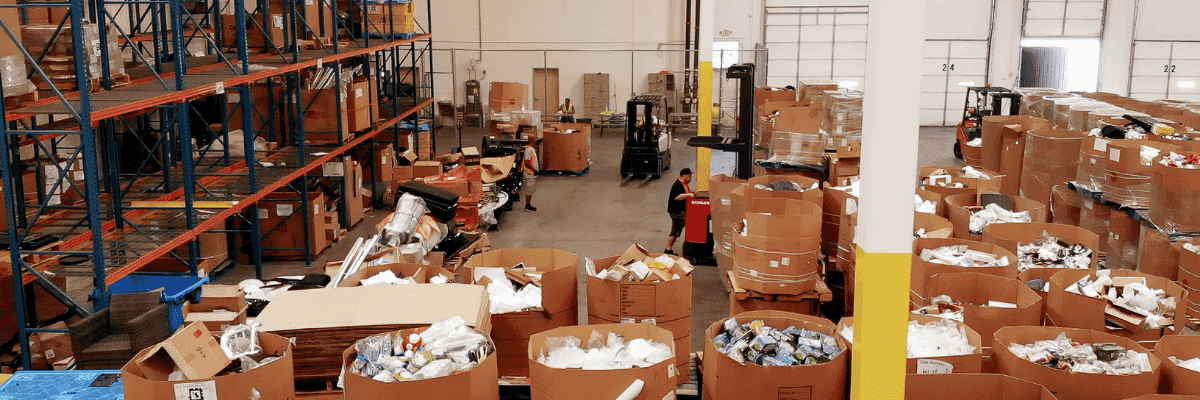
Our nationwide network of ZeroPoint Facilities addresses this challenge, taking materials as-is, without requiring any pre-sorting at the site level. At the ZeroPoint Facility, goods and materials are separated into streams, debranded and destroyed when necessary, then aggregated and diverted.
Because this work happens within a controlled process, outcomes are fully tracked and documented in real time. Materials move through defined end-of-life pathways, producing traceable, verified data that supports EPR reporting.
For companies managing EPR obligations, this approach removes a major barrier to recycling complex materials. It shifts the operational burden away from individual sites while still delivering consistent, auditable outcomes.
EPR Is an Operating Model Decision
Extended Producer Responsibility is no longer a theoretical policy trend. It’s an operational reality that’s expanding in scope, tightening expectations, and reshaping how companies are held accountable for materials after the sale. The uneven rollout in the United States makes it easy to underestimate how quickly pressure can build.
The companies that navigate EPR most effectively don’t treat it as a reporting exercise or a narrow compliance task. They recognize it as an operating model decision. Where responsibility sits, how decisions are made, and how complex material streams are handled matter more than any single regulation or fee structure.
EPR will continue to evolve. Requirements will change, materials will be added, and scrutiny will increase. Organizations that build operating models capable of absorbing that change will be better positioned than those relying on workarounds and after-the-fact fixes. At this stage, readiness is more about putting the right structures in place than about having all the answers.
Ready to plan your EPR strategy? Connect with one of our experts.